Ross Poldark (The Poldark Saga #1) by Winston Graham

Ross Poldark

Ross Poldark returns to Cornwall from war, looking forward to a joyful homecoming with his family and his beloved Elizabeth. But instead he discovers that his father has died, his home is overrun by livestock and drunken servants, and Elizabeth, having believed Ross dead, is now engaged to his cousin. Ross must start over, building a completely new path for his life, one that takes him in exciting and unexpected directions.

Thus begins an intricately plotted story spanning loves, lives, and generations. The Poldark series is the masterwork of Winston Graham, who evoked the period and people like only he could, and created a world of rich and poor, loss and love, that readers will not soon forget.

Ross Poldark (The Poldark Saga #1) by Winston Graham
Published 1945
Format: paperback; 314 pages
Classics/Historical Fiction/Romance
Also By This Author: Demelza (The Poldark Saga #2)Jeremy Poldark (The Poldark Saga #3), MarnieThe Walking Stick
Goodreads | Amazon
My Rating: ♥♥♥

Thoughts:

Very rarely do I invest myself into epic family sagas. I usually lose interest or grow tired of the drama along the way. There have been exceptions, however (e.g. The Anne of Green Gables series), and Poldark has the potential to be one of them.

Needing a new period drama to watch now that Downton Abbey has finished, I stumbled upon BBC’s adaptation of Poldark and FELL IN LOVE! I hadn’t even watched half of the first episode before I was recommending the show to friends. In two days I binge watched all 8 episodes of season 1 (thanks, Amazon Prime!) and immediately picked up the first book from my local library and devoured it in a few days.

Ross Poldark begins with a war veteran returning home to discover that everyone believed him to be dead, his father has died and his inheritance is in near ruins, and the woman he loves is engaged to his cousin. Ross essentially has to start his life over from scratch, but with his determination, his wit, and through the help of two extraordinary women, his cousin, Verity, and his kitchen maid, Demelza, he beings to find hope and happiness again.

I love that this series begins with a protagonist who has already lost everything. It’s a welcomed change from the typical novel that starts off with everything going well for the main character for a chapter or two. I appreciated Winston Graham’s ability to skip over that unnecessary suspense and immerse the reader immediately into Ross Poldark’s despair. It makes the novel so much more intriguing.

It only took me a few chapters to fall in love with the characters. Ross is kind and compassionate, but like Heathcliff he has his demons that earn him sympathy from the reader. Verity is the selfless and loyal friend whom you can always depend upon, but she has her own heartbreaking past that she’s suffering from. Jud and Prudie offer some hilarious comic relief. And Demelza shows subtle courage in the face of adversity. She is the harbinger of hope and redemption for several of the other characters.

Read This Book If…

…you love investing yourself in long family sagas.
…you enjoy reading historical fiction that portrays the differences between different socioeconomic classes.
…you savor epic love stories.
…you’re a fan of Wuthering Heights, Jane Eyre, Game of Thrones, or Outlander. Poldark has similar themes, characters, and motifs.

Final Musings

c3ec42def26b74f5472f5e72dcfeeaa8

 I discovered Poldark by watching the current BBC television adaptation. Season 1 premiered last year and it covers the first two books in the series: Ross Poldark and Demelza. Here’s a trailer!!

They just finished filming Season 2, and it’s supposed to premiere in the fall in the UK…which means us Americans will have to wait nearly a year to see it! I’m going to break a rule I generally always follow. I’m going to watch Season 2 before I read ahead in the books. Normally I’m a huge advocator for “Read the book first,” but I want to keep the suspense of the show and I also know that, as a book purist, if an adaptation doesn’t stay true to the original story, I’m less likely to enjoy it UNLESS I watch it before I read the book.

But this means I can read the next book because Season 1 of the show already covered those events :)

Who else is excited for Season 2 of Poldark?!

Austen in August: What I’m Reading

Happy Friday everyone! Since we are a week into August, I decided to talk about some of the books I’m reading for this month’s Austen in August events.

AustenInAugustRBR-ButtonAdam at Roof Beam Reader is hosting his annual month-long event dedicated to Jane Austen, and this is the first year I’ve participated. At the end of the month I’m hosting a giveaway for all pre-registered Austen in August participants here on my blog :)

Misty at The Book Rat is hosting her annual two-week event later this month, and this is the third year I’ve participated. Last year I contributed a guest post and the year before that I joined in her group read-along of Mansfield Park.

This month I’m hoping to read 1-2 Jane Austen novels plus a selection of Austen adaptations/inspirations:

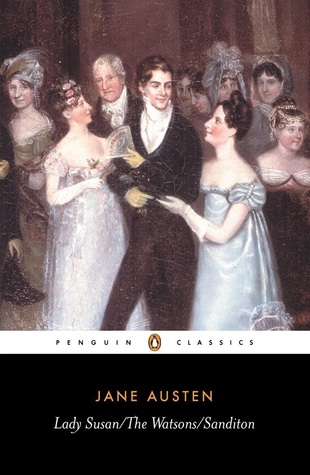
senseandsensibilityLady Susan

Amelia Elkins

Jane Austen Book Club

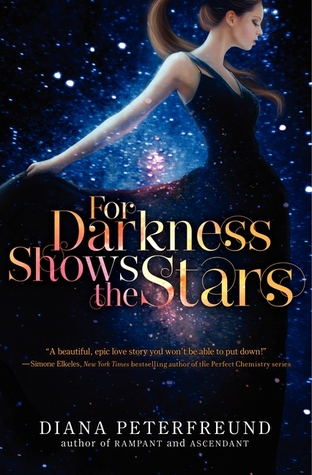
For Darkness

Are you participating in any Jane Austen events this month? What books are on your reading list?

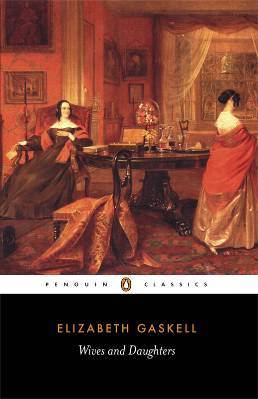
Wives and Daughters by Elizabeth Gaskell

Wives and Daughters

“How easy it is to judge rightly after one sees what evil comes from judging wrongly.”

Wives and Daughters by Elizabeth Gaskell
Published 1865 by Smith, Elder & Co.
Classics/Drama/Romance
Format: e-book; 805 pages
Also From This Author: North and South, Cranford
Goodreads | Amazon
My Rating: ♥♥♥♥

Synopsis:

Set in English society before the 1832 Reform Bill, Wives and Daughters centres on the story of youthful Molly Gibson, brought up from childhood by her father. When he remarries, a new step-sister enters Molly’s quiet life – loveable, but worldly and troubling, Cynthia. The narrative traces the development of the two girls into womanhood within the gossiping and watchful society of Hollingford.

Thoughts:

This book was so hard to finish! Not only because I didn’t want it to end, but also because I knew beforehand that Mrs. Gaskell suddenly passed away a mere chapter or two before Wives and Daughters would have been completed. I absolutely loved the ending to North and South, and I so would have enjoyed reading Gaskell’s intended ending for this novel, but fortunately the editor does leave us with some closing remarks about how the author planned the ending. So even though the novel ended abruptly, at least there was a bit of closure.

The plot of Wives and Daughters is very long and may seem unending at times, but the characters are very interesting. I appreciated how Gaskell depicted real, disjointed families and in the midst of all the selfishness and scandals we have Miss Molly Gibson, who learns to grow up when her father unexpectedly decides to remarry. Some readers may find Molly a bit dull due to her high Victorian morals, but I love her all the more for them. Molly, similarly to Fanny Price of Mansfield Park, seems to be surrounded by friends and family who are selfish, unforgiving and at times harsh, and who gossip uncontrollably without considering the harm it inflicts upon others. Often at times my heart would break for Molly and her plights, but I knew I could count on Mrs. Gaskell to reward her heroine for it at the end.

While I hated Molly’s stepmother, the widowed Mrs. Kirkpatrick (she could give Mrs. Bennet some competition as Most Annoying Mother), I did care for her daughter Cynthia, who is arguably the most interesting character in the entire novel. Sometimes it felt as if Cynthia, and not Molly, was the main character. But I felt the most for Molly, especially when Roger Hamley, Molly’s dear friend and secret crush whom I had adored for the first half of the novel, practically ignores Molly during his quest for Cynthia’s favor (he begins to make up for it towards the end of the novel, however!). This is another reason why I likened Molly Gibson to Fanny Price, although the two big differences are that Cynthia Kirkpatrick, unlike Mary Crawford, honestly cares for Molly and is a genuine friend to her and Molly is also more confident of herself than Fanny Price (so for all you readers who dislike Mansfield Park and it’s “goodie-goodie” heroine, Wives and Daughters should be more agreeable to you. I for one happen to love both novels, but W&D touched my heart a lot more).

Read This Book If:

…you love Victorian Lit and its themes.
…you enjoy novels with both lovable and detestable characters.
…you’d be interested in seeing parallels between mid-19th century society and today (gossiping, secrets, love triangles).
…you’re looking for a novel that will make you “feel all the feels”, as I like to say.

Final Musings:

I finished this novel a few days ago and I am still on a book hangover. I want more of Molly Gibson, her family, and the dear Hamleys. The more I think about it, the sadder I am that Gaskell passed away just before finishing Wives and Daughters. I really loved the ending to North and South, despite the fact that the miniseries ending is beautiful in its own way, and I wish I could read Mrs. Gaskell’s own intended happy ending for dear Molly. BUT, the BBC Wives and Daughters miniseries offers its own ending that I really enjoyed, despite the fact that it wasn’t exactly what Mrs. Gaskell would have penned herself. It’s still beautiful and fits the characters very well. I would encourage everyone who loves period dramas to give the miniseries a watch, and if you already have seen it (or if you don’t mind spoilers), I’ve shared the ending scene here because I love it so much and have watched it quite a few times (I’m not ashamed to admit it)!

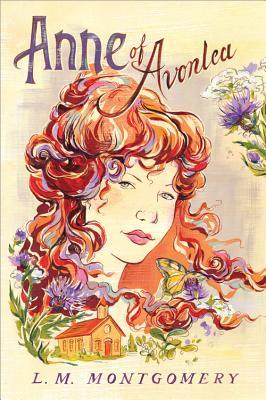
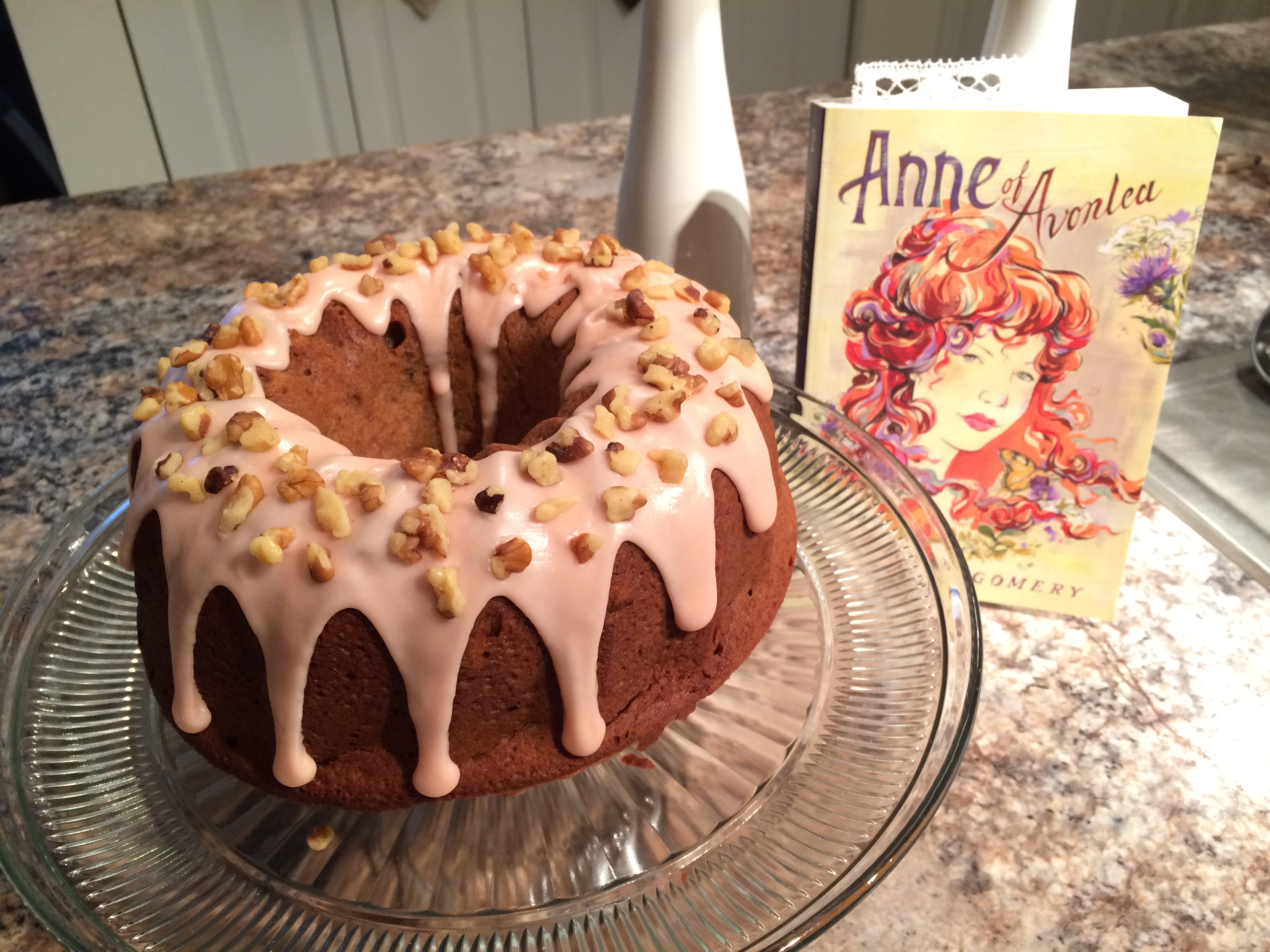
Walnut Spice Cake Inspired by Anne of Avonlea

Anne of Avonlea

“Poor Anne got her hat and her twenty dollars and was passing out when she happened to glance through the open pantry door. On the table reposed a nut cake which she had baked that morning…a particularly toothsome concoction iced with pink icing and adorned with walnuts. – Anne of Avonlea, Chapter 2

Yummmm. That was my thought when I read this passage from one of my all-time favorite books. Anne Shirley has many baking catastrophes when we first meet her in Anne of Green Gables, but every now and then she creates some truly delicious “concoctions” and pregnant me started craving this particular nut cake as soon as I pictured it with pink icing and walnuts. So I became inspired to bake my own! I know it’s summer and this cake has more of an autumnal taste to it, but it’s delicious all the same!

I found this recipe by Martha Stewart for an Applesauce Cake that I tweaked a bit

Walnut Spice Cake

Ingredients

  • 2 1/4 cups all-purpose flour
  • 2 teaspoons baking soda
  • 1 teaspoon salt
  • 1 1/2 teaspoons ground cinnamon
  • 3/4 teaspoons pumpkin pie spice
  • 1 cup (2 sticks) unsalted butter, room temperature
  • 1 1/2 cups packed light-brown sugar
  • 1/4 cup honey (I didn’t measure it out; I drizzled it)
  • 2 large eggs
  • 2 cups applesauce
  • 1 cup chopped walnuts
  • Nonstick cooking spray
  • For icing: 3 tablespoons melted butter, 2 cups confectioners’ sugar (add more or less, depending on your sweet-tooth), 4 tablespoons water, 1 1/2 teaspoons vanilla extract, red food coloring. Side note: next time I make this icing I will probably use a butter cream icing instead.
Messy Kitchen

I love messy kitchens while baking! (I also love cleaning it up as fast as I can once the cake is in the oven)

Directions

  1. Preheat oven to 350 degrees. In a large bowl, whisk together flour, baking soda, salt, cinnamon, and pumpkin pie spice. Set aside.

  2. In another bowl, with an electric mixer, beat butter, brown sugar, and honey until light and fluffy. Add eggs, one at a time, beating until combined. With mixer on low speed, gradually add flour mixture; beat just until combined. Beat in applesauce. Fold in walnuts.

  3. Generously coat a nonstick 9-inch tube pan with cooking spray. Spoon batter into pan; smooth top. Bake until a toothpick inserted in the middle comes out clean (but slightly wet), 60 to 70 minutes (I moved the pan to the bottom rack after 60 minutes so the middle of the cake would bake faster).

  4. Cool on a wire rack 10 minutes. Turn out of pan onto a cutting board or baking sheet; invert cake onto rack, top side up. Cool completely. Dust with confectioners’ sugar before serving, or top with icing and chopped walnuts, if desired.

  5. For Icing: Mix melted butter, confectioners’ sugar, water, and vanilla extract until smooth. Add 1-2 drops of red food coloring to get the pinkness you desire. Stir until blended. Pour over cake and sprinkle chopped walnuts on top. Tip: reheat icing just before pouring. Halfway around the cake I noticed that my icing wasn’t “dripping” enough.
Walnut Spice Cake

Ta-da! Walnut Spice Cake, inspired by Anne of Avonlea by L. M. Montgomery.

Enjoy!

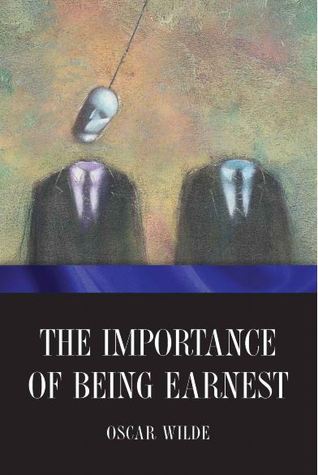
The Importance of Being Earnest by Oscar Wilde

earnest

“In matters of grave importance, style, not sincerity, is the vital thing.”

The Importance of Being Earnest by Oscar Wilde
First Performed on February 14, 1895
Classic/Play/Comedy
Format: audiobook (table reading); 1 hour 46 minutes
Also By This Author: The Picture of Dorian Gray
Goodreads | Amazon | Barnes & Noble

My Rating: ♥♥♥♥♥

Synopsis

Cecily Cardew and Gwendolen Fairfax are both in love with the same mythical suitor. Jack Worthing has wooed Gewndolen as Ernest while Algernon has also posed as Ernest to win the heart of Jack’s ward, Cecily. When all four arrive at Jack’s country home on the same weekend, the “rivals” to fight for Ernest’s undivided attention and the “Ernests” to claim their beloveds, pandemonium breaks loose. Only a senile nursemaid and an old, discarded hand-bag can save the day!

Thoughts

One of my favorite book synopses ever belongs to The Importance of Being Earnest: “A trivial comedy for serious people.” It just fits it so perfectly! I decided to read this book last month because I wanted a short classic and I had never read anything by Oscar Wilde before. I was very pleasantly surprised. The Importance of Being Earnest isn’t a deep story that will leave you pondering over the dialogue for days, but it is fun and very enjoyable. I laughed out loud and even gasped a few times while listening to an audio recording of this book. Wilde’s writing is witty and his characters are entertaining. And if you need another reason to read/listen to/watch this story, today is the 120th anniversary of its first performance!

Yes, The Importance of Being Earnest premiered on Valentine’s Day in 1895. So if you still need date night or hang out plans for later, you can watch one of the film adaptations or, if you’re lucky, find theater tickets for a local performance. It’s sure to be a fun evening whether you spend it with friends or a special someone :)

Read This Book If…

…you love trivial comedies! (and you’re a serious person)
…you enjoy witty banter, puns and pranks, and clever disguises.
…you’re looking for a short read that can be enjoyed in one sitting.
…you like Classics or would like to “ease” your way into the genre.

Final Musings

I listened to a table recording of The Importance of Being Earnest during my commute to work and back one day. It’s a very quick read but it’s fun and uplifting. The production of this particular recording did a very superb job, actually. They had four different actors who also read the stage directions to make up for the fact that it wasn’t a staged performance. Here’s the link to the YouTube video, but there are also taped performances online to watch as well!

And, of course, there’s the movie adaptation featuring Colin Firth, Rupert Everett, Francis O’Conner, and Reese Witherspoon.

Earnest

Earnest:)

Back to the Classics 2014 Wrap-Up Post!

classics2014I did it!! I read 10 classics from various authors, countries, and time periods in 12 months! (To be honest, a big chunk of those books were read this month *procrastinator*).

This was such a fun challenge, and I’m earnestly considering doing the Back to the Classics 2015 challenge next year, although I still have a little time to decide :)

Here is my wrap-up post listing all of my reviews for this challenge:

Required Categories:

Optional Categories:

I thoroughly enjoyed every one of these books (except for maybe Wuthering Heights), but if I had to rank my Top 3 it would be: North and South, Little Women, and To Kill a Mockingbird.

Thank you to Books and Chocolate for hosting this challenge!

Have you read any of these books? What did you think? Are you up for next year’s Back to the Classics Challenge?

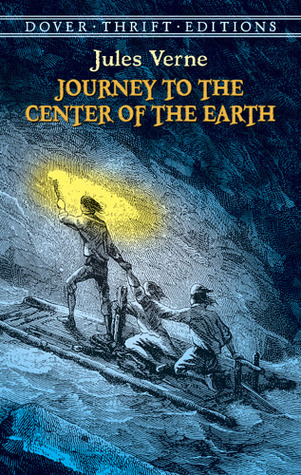
Voyage au Centre de la Terre by Jules Verne (and Crossing Something Off My Bucket List)

julesverne

“As long as the heart beats, as long as body and soul keep together, I cannot admit that any creature endowed with a will has need to despair of life.”

Journey to the Center of the Earth by Jules Verne
Published 1864 by Pierre Jules Hetzel
Classics/French/Adventure
Format: paperback; 338 pages
Also By This Author: Around the World in Eighty Days, From the Earth to the Moon, 20,000 Leagues Under the Sea
Goodreads | Amazon
My Rating: 4/5

Synopsis:

The intrepid Professor Liedenbrock embarks upon the strangest expedition of the nineteenth century: a journey down an extinct Icelandic volcano to the Earth’s very core. In his quest to penetrate the planet’s primordial secrets, the geologist–together with his quaking nephew Axel and their devoted guide, Hans–discovers an astonishing subterranean menagerie of prehistoric proportions. Verne’s imaginative tale is at once the ultimate science fiction adventure and a reflection on the perfectibility of human understanding and the psychology of the questor.

Thoughts:

You may be wondering why I used the original French title of Journey to the Center of the Earth in the blog title…that’s because I read this book in French! If you’ve been to my blog before, you may be familiar with my list of 25 things to do for my 25th year. #3 on that list was to “read an entire book in French.” So I can now cross that off!

It wasn’t easy–the French language has a special past tense that is only used in books or in storytelling, which makes it really hard to learn because you’ll hardly ever have the need to use it in a conversation. To be honest, I did not understand everything that goes on in this book, but I picked Jules Verne to read because 1) French Classics are easier to understand than English classics because the French language has barely changed over the centuries, 2) Classic novels have more grammatically correct dialogue between characters as opposed to modern novels, and 3) Jules Verne writes suspenseful and captivating adventure novels that are easy to follow and visualize.

On to the book! The only other Verne novel I’ve read before Journey to the Center of the Earth was Around the World in Eighty Days, which I really enjoyed. Verne’s characters are so particular and unique and the adventures they go on are always full of suspense and those “this is our last hope” type of scenes so that you’ll never be bored while reading one of his novels. Professor Lidenbrock is ever persistent and hopeful during this life-threatening journey while his nephew, Axel, often exclaims that all hope is lost and the group is sure to perish.

As always, true to Verne’s captivating writing style, there is a twist at the end of Journey to the Center of the Earth that anyone who has previously read Verne will be expecting to discover :)

Read This Book If…:

…you love an adventure!
…you’re into science fiction books, especially those written by the fathers of sci-fi.
…you crave a book that will make you both laugh out loud and turn the pages in suspense.
…you’re looking for a new unforgettable adventure to experience.

“Was I to believe him in earnest in his intention to penetrate to the center of this massive globe? Had I been listening to the mad speculations of a lunatic, or to the scientific conclusions of a lofty genius? Where did truth stop? Where did error begin?”

Final Musings:

If you’ve never read a novel by Jules Verne, I would suggest Journey to the Center of the Earth as a good starting point, although I preferred Around the World in Eighty Days (really though, any Verne book is a good book to read). Full of quirky characters, daring adventures, and spectacular imagery, Journey to the Center of the Earth is definitely a classic that deserves its masterpiece label.

A Separate Peace by John Knowles

aseparatepiece

“We reminded them of what peace was like, of lives which were not bound up with destruction.”

A Separate Peace by John Knowles
Published 1959 by Secker & Warburg

Classics/Young Adult
Format: paperback; 204 pages
Also By This Author: Peace Breaks Out, Phineas
Goodreads | Amazon

My Rating: 4/5 

Synopsis:

Set at a boys boarding school in New England during the early years of World War II, A Separate Peace is a harrowing and luminous parable of the dark side of adolescence. Gene is a lonely, introverted intellectual. Phineas is a handsome, taunting, daredevil athlete. What happens between the two friends one summer, like the war itself, banishes the innocence of these boys and their world.

Thoughts:

I first read A Separate Peace nearly 14 years ago while I was in 7th grade. I’ve always felt like my assigned reading choices in school were generally interesting books that made a long-lasting impact on me; A Separate Peace is no exception. Do you ever reread books you haven’t read in ages and find yourself thinking, “I do not remember imagining it this way”? For me it was more about remembering the characters differently.

Gene and Phineas are two 16-year-old boys living at an all-boys prep school, where most of the students and staff are affected by the outbreak of WWII. Gene and Phineas, along with a few other students, create the “Super Suicide Society,” where the whole goal is to do daring and rule-breaking stunts. This club, and the leadership of Phineas, reflect the escape the boys try to make from the reality of war. The irony, however, is that the boys have brought the war into their club.

Before I reread this book, I had the mindset that Phineas was that one friend we all have who always tries to “one up” us in everything. You know who I’m talking about–you do well on a test, they do better; you feel like you’re really good in a sport or hobby, they show you how much more talented they are (and make it look effortless); you receive an awesome present from someone, they tell you that they got one once and it just wasn’t that great. Well, when I reread this novel, I realized that Phineas is not that “one-upper” friend at all. Which means that I obviously relate a lot to Gene, who creates this whole unspoken competition between himself and Phineas.

I think a lot of people can relate to the characters and circumstances in this novel, even though it takes place in the early 1940s. That’s why this book had so much impact on me when I was 12 and when I was 25; you can put those themes into any context and will still be able to empathize with the characters.

Read This Book If…:

…you enjoy short, powerful novels.
…you like reading historical, young adult books that deal with mature subject matter.
…you’re intrigued by themes of war, childhood innocence, jealousy, and forgiveness.

Final Musings:

One of the things I love most about these short & powerful novels is that they always have so many good quotes to reflect on!

“Because it seemed clear that wars were not made by generations and their special stupidities, but that wars were made instead by something ignorant in the human heart.”

North and South by Elizabeth Gaskell

NorthandSouth

“Looking back upon the year’s accumulated heap of troubles, Margaret wondered how they had been borne. If she could have anticipated them, how she would have shrunk away and hid herself from the coming time! And yet day by day had, of itself, and by itself, been very endurable–small, keen, bright little spots of positive enjoyment having come sparkling into the very middle of sorrows.”

North and South by Elizabeth Gaskell
Published in 1858 by Chapman & Hall
Classics/Drama/Romance
Format: paperback; 424 pages
Also From This Author: Cranford, Wives and Daughters
  Goodreads Amazon
My Rating: 5/5

Synopsis:

When her father leaves the Church in a crisis of conscience, Margaret Hale is uprooted from her comfortable home in Hampshire to move with her family to the north of England. Initially repulsed by the ugliness of her new surroundings in the industrial town of Milton, Margaret becomes aware of the poverty and suffering of the local mill workers and develops a passionate sense of social justice. This is intensified by her tempestuous relationship with the mill-owner and self-made man, John Thornton, as their fierce opposition over his treatment of his employees masks a deeper attraction. In North and South, Elizabeth Gaskell skillfully fuses individual feeling with social concern, and in Margaret Hale creates one of the most original heroines of Victorian literature.

Thoughts:

So, I adored this novel. It was such a wonderful surprise, because I had read the first third of it for a Victorian Lit & Technology seminar I took in college, but for various reasons I never finished it (the curse of assigned reading). This year, I decided to read it as part of my Classics Club and Back to the Classics lists, and now I keep thinking, “Why did I never read this book sooner?!”

North and South is a coming of age tale of sorts that follows Margaret Hale and her family as they move from their beloved country home of Helstone in the south of England to the industrial manufacturing city of Milton in the north. I identified with this novel in some particular ways, namely the fact that I have uprooted my life before and moved from what is known and comfortable to what is foreign and seemingly harsh. I’m sure most expats feel the same way: when you move to a new country and are unfamiliar with the language and culture, it can be very stressful and depressing for a while. But, if you try to assimilate and learn the ways of your new home, chances are you’ll absorb parts of the new culture and learn to embrace its differences from your mother culture. This is something I loved most about Margaret. She could have boxed herself up and refused to reach out to her new neighbors, but instead she intermingles with Milton inhabitants of all class ranks, and she grows to love them. And her eagerness to do so has a positive effect on her acquaintances as well.

Which brings me to Mr. John Thornton. Even though Margaret despises him from the start, I always had a soft regard for him (probably because of Gaskell’s descriptions of him, and because I already knew how this story would end from watching the miniseries). Thornton is viewed as a cruel and unkind master who has no compassion for his mill workers, which isn’t true, but this is attributed to Margaret’s misunderstanding of Thornton and Milton ways. By the end of the novel, Thornton learns as much from Margaret and his workers as Margaret learns from all of them in return. I loved that they all had faults and they all struggled to overcome them.

“I wanted to see the place where Margaret grew to what she is, even at the worst time of all, when I had no hope of ever calling her mine…”

Oh yeah, and I loved the romance :) It was one of the “bright spots” that relieved the moments of grief and suffering that take up most of this novel.

Read This Book If…:

• You love reading Victorian Lit that focuses on social injustices and “new” technology.
• You enjoyed Jane Eyre (there lies the same themes of human conscience, right vs. wrong, and compassion).
• You’re intrigued by Byronic heroes (Mr. Thornton has, in my opinion, qualities of both Mr. Darcy and Mr. Rochester).
• You like endings that make you laugh, cry, and feel inspired <3

Final Musings:

North and South is not your typical period romance. It deals with some serious grief and suffering; but as Margaret Hale discovers, there is always some “bright spot” to make life enjoyable. Plus, there’s a Byronic romance that will make you swoon (and it even made me cry, happily and sadly). And if romance isn’t your thing, this novel still talks about social injustices that remain relevant today. Unlike some other similar novels, North and South will make you think and feel but it won’t leave you depressed (I’m looking at you, Wuthering Heights).

Stop by later this week to see my post on the BBC miniseries of North and South!

War of the Worlds by H.G. Wells

waroftheworlds

“For a time I believed that mankind had been swept out of existence, and that I stood there alone, the last man left alive.”

The War of the Worlds by H.G. Wells
Published in 1898 by William Heinemann
Classics/Science Fiction
Format: paperback; 248 pages
Also From This Author: The Time Machine, The Invisible Man
  Goodreads Amazon
My Rating: 4/5

Synopsis

Man had not yet learned to fly when H.G. Wells conceived this story of a Martian attack on England. Giant cylinders crash to Earth, disgorging huge, unearthly creatures armed with heat-rays and fighting machines. Amid the boundless destruction they cause, it looks as if the end of the world has come.

Thoughts

As an amateur fan of early science fiction, I am just amazed at H.G. Wells’s creativity and imagination. He wrote this book before the Wright brothers had even developed a way for man to fly, and yet he was able to effortlessly describe flying capsules crashing to Earth in the dawn of an alien invasion. I have always been so amazed at people who are able to imagine the idea of something before it is even tangible. I don’t have that type of intuition or innovation, so I really admire people who do.

This was not my first experience with The War of the Worlds. I remember seeing the 2005 film version with Tom Cruise and Dakota Fanning and being absolutely absorbed in the story. I was terrified and wondrous at the same time. So when I finally started reading this book I was happy to find that The War of the Worlds was as suspenseful and thought-provoking on page as it was on-screen.

One of my favorite aspects of science fiction is the social commentary. I love that science fiction is more about analyzing the human condition than it is about the technology and the futuristic settings. H.G. Wells was a huge part of the social science fiction movement, and in The War of the Worlds this is seen in the relationship between the narrator and the Curate as the world they know is falling apart. This relationship was the most interesting part of the novel for me.

Read This Book If…:

…you enjoy Sci-Fi, especially early Sci-Fi
…you’re looking for a book that can speak to all generations
…you’re a lover of suspense!
…curiosity gets the better of you sometimes

Final Musings

I don’t know why I hesitated for so long before finishing an H.G. Wells novel! I love so many movie adaptations of his works, it’s no surprise really that I’d love his books too. Next H.G. Wells book I’ll read will be The Time Machine (which happens to be one of my favorite movies!).

Are you a fan of H.G. Wells? What are some of your favorite early science fiction works?