A Grimm Legacy by Janna Jennings

grimmlegacy

“I’m a girl of many hidden talents.” She gestured to her filthy, damp clothes. “Keeping myself out of trouble is not one of them.”

A Grimm Legacy by Janna Jennings
Published Oct 28, 2013 by Patchwork Press
Young Adult Fantasy
Format: e-book; 308 pages
Also From This Author: Grimm Memories
Goodreads | Amazon
Rating: 4/5

Synopsis:

Enchanted castles and charming princes thought to exist only in stories come to life in this classically twisted fairy tale that combines the timeless quality of folktales with the challenges of the modern world. 

The woods of Elorium appear ordinary to Andi…until the birds start to talk and elves answer doors. Whisked out of her world along with three strangers, Andi finds herself the reluctant guest of Mr. Jackson, a perplexing millionaire who claims to be able to help them get home. The secrets he harbors, however, make it difficult to know just who to trust. 

When the group of teenagers discover that in this new world, fiction is anything but, and that they all have unexpected family ties to this fairy tale land, they must learn to rely on each other.

Faced with characters short on whimsy and bent toward treachery, Andi, Quinn, Fredrick, and Dylan are forced to play their parts in unfinished fairy tales. But in Elorium, happily ever after is never guaranteed.

Thoughts:

loved A Grimm Legacy! The fairy tale world had me captivated instantly and I was rooting for the four main characters the entire time. Andi is the unwavering leader, the main link between the other characters and the fantastical world of Elorium. Fredrick, a compassionate southern boy, is the brave protector. Quinn, strong and selfless, is always quick-thinking in stressful situations. And Dylan, a stereotypical Californian surfer, has a secret soft spot beneath his persuasive exterior.

This story begins when these four teenagers from different areas of the country mysteriously appear in a foreign world. As the plot progresses, we discover that Andi, Fredrick, Quinn, and Dylan each have a connection to the world of Elorium.

One of the coolest things about this novel is how it echoes popular Grimm fairy tales, but with a twist, of course :) Even if you aren’t too familiar with fairy tales (which I am not), you’ll still recognize references to the major stories. For the lesser known tales, Janna Jennings summarizes them in a fitting way that still leaves you anxious to find out what happens next.

“Don’t say impossible, not after the day we’ve had.”

This book is suspenseful and intriguing! During the more mysterious plot lines I found myself devouring every page. And let me just comment on this gorgeous cover: I love it! I am a sucker for beautiful book covers even though I try not to ignore or judge books with horrible covers (I fail sometimes). This cover is great–it’s simple yet it pulls you in at the same time.

Read This If:

…you enjoy fairy tales
…you are a fan of the TV show “Once Upon A Time” (this book is exactly like that)
…you’re into reading adventure novels
…you love books that leave you hanging in suspense until the last page

Final Musings:

This book exceeded my expectations. It was full of mystery and suspense, and several of the big reveals really surprised me. I can’t wait to read the sequel, Grimm Memories! Check back for that review next week :)

Whole In The Clouds by Kristine Kibbee

Whole In The Clouds

“Don’t forget, dear. This is you. This is your strength and your compassion and all the love inside of you. This is you as you truly are.”

Whole In The Clouds by Kristine Kibbee
Published Nov 6, 2014 by Illusio Baqer (Zharmae Publishing Press)
Middle Grade Fantasy
Format: e-book; 156 pages
Goodreads | Amazon
Rating: 3/5

Synopsis:

Cora Catlin is a misfit at best, and an outcast at worst. She feels out-of-place, as if everything is backward and something is missing from her life.

And then, on her first day of middle school, everything changes.

When Cora encounters an elfin stranger who speaks of the magical world Clouden, an entire kingdom hidden up in the sky, she can’t wait to leave her boring, humdrum life behind. As Cora travels to her new home, she finds herself transformed–and if that weren’t enough, she has to adjust to royal parents, talking Pegasuses, a raging war, and an alluring love interest as well.

Exploring this new land, Cora unearths wonders and secrets beyond her wildest imaginings, discovering the meaning of true friendship, love, and what it means to feel whole.

Thoughts:

Whole In The Clouds was a really refreshing read for me. I haven’t read a Middle School level book in quite some time, mostly because I’m suspicious of what I might find in them, but this one was not what I was expecting (in a good way). Right from the start I realized that Cora is not your typical twelve-year-old girl. She doesn’t daydream over boys, she doesn’t have sleepovers with her friends (because she doesn’t have any), and she doesn’t have any hobbies. Like many preteens, Cora is bullied by her classmates and because of this she is self-conscious about her appearance and she begins feeling lonely and out-of-place.

Seeing Cora as an outcast was really sad. The bullies in the beginning of the story gave me compassion for Cora right from the get-go, and then I developed a soft spot for her when I discovered that Cora loved adventures. (I love adventures too!) I was really excited when the fantasy aspect of the novel set in. I haven’t read very many recent fantasy novels, but this one borrowed a few qualities from Harry Potter and Narnia, two of my favorite series. After Cora finally arrives in Clouden, the novel develops this exciting & mysterious atmosphere.

There are several areas of the book that did seem a little cheesy and unrealistic to me, I have to admit, but there were also a lot of things I really liked. The most interesting thing for me was the difference between a person’s appearance in Clouden and their appearance in The Backworlds (or the real world for us). In The Backworlds, as we know, looks can be deceiving. A physically charming or beautiful person can really be evil or malicious on the inside. In Clouden, our inside characteristics are reflected in our physical appearances. Cora, who is kind, compassionate, and selfless, holds this ethereal presence in Clouden even though in The Backworlds she is mocked for her plain appearance. This “our outsides reflect our insides” idea resonated with me and I appreciated the extra virtue that those who are beautiful on Clouden aren’t vain about their appearances.

Cora squinted through the darkness at the mirror and was astounded to find someone else staring back at her. An ethereal girl looked quizzically through the glass. She had flowing copper-red hair that glistened like spun silk and a pair of the most haunting green eyes Cora had ever seen. Her skin was the color of baby-doll porcelain and when coupled with her slightly flushed rosy cheeks resembled strawberries and cream. The girl’s mouth, pursed in confusion, was delicately shaped, her lips a natural crimson that no makeup could duplicate.

Whole In The Clouds made me feel all sorts of emotions: happiness, sadness, suspense, anxiety, and I even gushed over the little bit of romance that was woven in. I was a little disappointed in how quickly and cleanly everything was wrapped up at the end, but I was satisfied in the ending and overall I really enjoyed Kristine Kibbee’s second novel.

Read This If…:

…you love characters who are pure-of-heart
…you wish your pets could talk
…you enjoy stories about good vs. evil
…you crave an adventure!

Final Musings:

Although Whole In The Clouds felt a bit cheesy at times, overall I really enjoyed the purity in Cora and her story. Cora is a very mature, caring, and selfless main character who has a heart for those around her. This novel is a fun fantastical read that deals with bullying, parent-child relationships, and believing the best in people.

Dear Mr. Knightley by Katherine Reay

dearmrknightley

“What do you know about me, Mr. Knightley? Really know? No matter what Father John told you or sent you, you can’t know it all. No one does. I alone carry it each and every day. And no matter how many characters I hide behind, how much work I bury myself beneath, my past still pushes me every day and haunts me every night.”


Dear Mr. Knightley by Katherine Reay
Published Nov 2013 by Thomas Nelson
Adult Fiction-Romance
Format: e-book; 328 pages
Also From This Author: Lizzy & Jane
Goodreads | Amazon
My Rating: 4/5

Synopsis:

Samantha Moore survived years of darkness in the foster care system by hiding behind her favorite characters in literature. After college, she receives an extraordinary opportunity: the anonymous “Mr. Knightley” offers her a full scholarship to earn her graduate degree at the prestigious Medill School of Journalism. The sole condition is that Sam write to Mr. Knightley regularly to keep him updated on her progress.

As Sam’s true identity begins to reveal itself through her letters, her heart begins to soften to those around her–a damaged teenager and fellow foster care kid, her classmates and professors at Medill, and most powerfully, successful novelist Alex Powell. But just as Sam finally begins to trust, she learns that Alex has secrets of his own–secrets that make it impossible for Sam to hide behind either her characters or her letters.

Thoughts:

Dear Mr. Knightley is one of those novels that takes a little while to get into, but once you reach that point, it’s really hard to put the book down.

For me, there were two reasons I wasn’t fully invested from the beginning: the epistolary style and the e-book format. I was given this novel by the publisher in exchange for a review, but the e-book they sent me was so bad, and I’m not referring to the context of the story at all. The e-book was FULL of punctuation errors that would have normally caused me to not finish the book. So I highly recommend reading this book in print format, to avoid any e-book errors, but also because this story is told almost entirely through letters. It took some time for me to get used to Samantha’s letters, but fortunately she is a reliable narrator, one you start to root for after uncovering her past.

Samantha’s story is intriguing, especially when we finally get to see into her past. Because she’s writing these letters to an anonymous stranger, she doesn’t just jump into her painful back story. We have to wait a little while, just like all of the other characters, before she opens up to us. But once she finally does become vulnerable her story becomes so much more interesting. Before that moment the story is rather fluffy and sappy (especially with all of the classic literature quotes she throws in during daily conversations), but afterwards you start to understand how she uses these characters to hide behind because she’s too afraid to get hurt by others.

“I still fear judgement. Most days I feel cast off, dirty, and not worthy. Won’t others feel the same way about me?”

Which brings me to the secondary characters. To be honest, I was much more invested in their stories than in Sam’s, especially Kyle’s and the Muirs’s. Kyle is the wayward teenager who shares Sam’s foster system tragedy. Sam takes him under her wing when he’s abrasive and short-tempered and by the end you really just want to hug him. I loved how his character development panned out. The Muirs are a lovable older couple that bring warmth and comfort into the novel and into Sam’s life.

Dear Mr. Knightley surprised me because it was so much more than just an Austen-inspired novel. The themes cut much deeper: allowing oneself to be vulnerable after being hurt emotionally and physically, child rights & the pitfalls of the foster care system, and helping out others even in the midst of personal struggles and tribulations.

Read This If…:

…you enjoy books that surprise you
…you like reading books that talk about deep and painful things
…you sympathize with characters who stay pure and kindhearted in an ugly world
…you love a love story!

Final Musings:

I really enjoyed Dear Mr. Knightley because it surprised me with its deeper & unexpected plot points. This story made my heart break at times and my face light up in a smile at others. Please give this novel a chance! It’s much more than an Austen-inspired light read :)

“All this is a part of us. God, bad, and ugly, Sam, this is our story.”

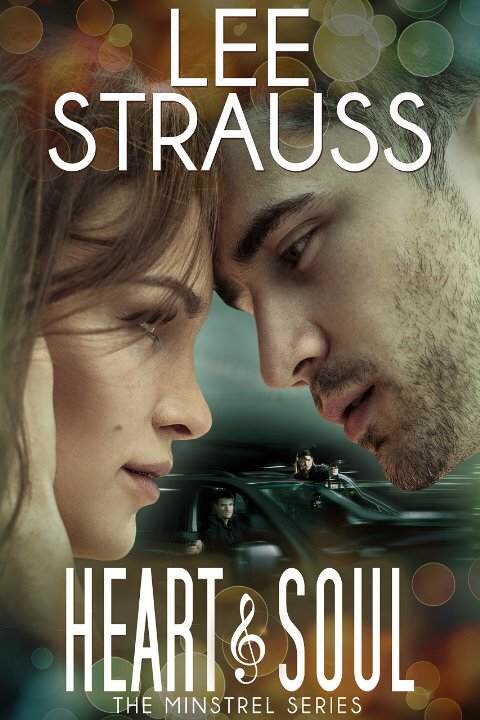
Review & Giveaway: Heart & Soul by Lee Strauss

Heart and Soul

One of my favorite indie authors is Elle Strauss, who typically writes Young Adult science fiction romances. My favorite novel of hers is Clockwise, a story about a high schooler who frequently and unintentionally time travels to the Civil War era. But Elle Strauss also writes adult fiction under the pen name Lee Strauss.

Lee Strauss’s most recent series, The Minstrel Series, is a clean romance series that focuses on the lives of aspiring singer-songwriters. There are currently three novels in the Minstrel Series. The first two, Sun & Moon and Flesh & Bone, take place in Dresden, Germany and follow the lives of German twenty-somethings whose paths intertwine.
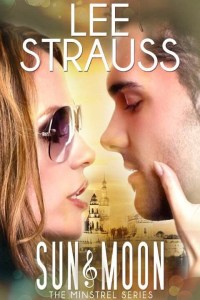
sun and moon
Sun & Moon: She has a past. He has a secret.
Katja’s a risk-taking singer-songwriter hoping to make it in the indie music scene in Dresden, Germany. Micah’s a brooding uptown banker on a quest.
There’s an undeniable attraction between them, a gravitational pull they both struggle to resist. Katja knows she mustn’t fall in love with this handsome enigma. There’s something dark lurking beneath the surface. He could be dangerous.
And even if her life isn’t on the line, her heart most definitely is.
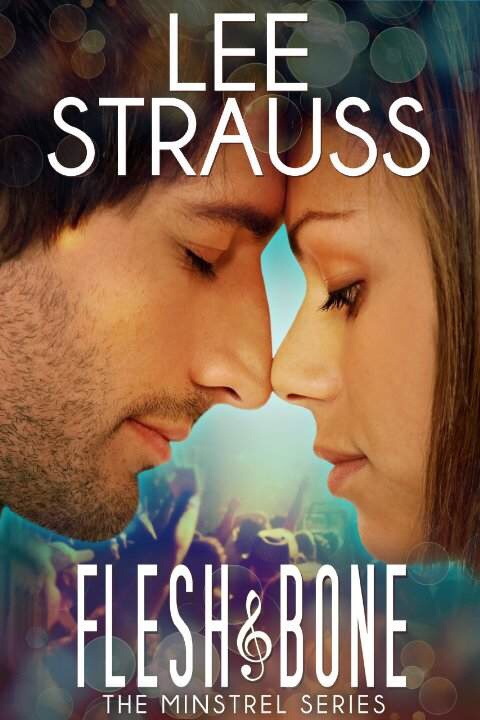
flesh and bone
Flesh & Bone: She can’t remember. He can’t forget.
Eva Baumann is invisible. Sebastian Weiss is famous. In a perfect world Eva would be fearless and Sebastian would be guiltless.
It’s not a perfect world.
Singer-songwriter Eva Baumann has a celebrity crush on Sebastian Weiss. He’s perfect to love because there is no way they could ever be a thing. She’s a nobody. He’s a heart-throb. Hiding an infatuation is easy for her because, since her accident, hiding is what she does best.
Sebastian Weiss’s band climbed the charts, seemingly overnight, and he’s finally living the dream. All he has to do is write enough songs to produce a second album. The bad news is he hasn’t written a song in over a year…
But then Sebastian stumbles into the Blue Note Pub in time to hear Eva Baumann perform a hauntingly beautiful song. Could this girl be the answer to defeating his writer’s block?
Eva and Sebastian begin a complicated writing relationship that leads to more. But Sebastian has a secret that will devastate them both.

Flesh & Bone has been my favorite installment so far in this series. I had a hard time putting it down! I loved the characters and the story line was very moving. I loved the way it dealt with forgiveness and redemption, and I also really enjoyed how the main characters grew and changed during the novel.

The third Minstrel novel, Heart & Soul was released yesterday, and I volunteered to receive a free copy in exchange for a review. Heart & Soul is a spin-off of Flesh & Bone and it follows the life of the main character’s sister, Gabriele. That being said, I felt that this novel could stand-alone (but definitely read Flesh & Bone, either before or after!).

Heart and Soul Heart & Soul: She’s heartbroken. He’s heartless.
Gabriele Baumann-Smith is deliriously in love with her young husband Lennon. Except, it turns out that Lennon Smith isn’t his real name. In fact, he’s full of secrets: a cottage on the southern British coast, an old girlfriend and…an identical twin brother.
Callum Jones—not his real name—can’t believe his brother’s widow came to England. He’d warned Mick—Lennon—that an inheritance could put the girl’s life in danger, and he was right.
“Mrs. Smith” is the last thing Callum needs to worry about right now. She’s beautiful, sure, takes his breath away at times. But when she looks at him, who does she see?
Gabriele’s heart is battered and bruised. Can one brother fix what the other left behind? And will they live long enough to find out?

This novel was much more suspenseful than the previous two, which I enjoyed because it changed things up a bit. Heart & Soul, like its predecessors, has lots of descriptive imagery. The first two novels take place in Germany, and you can easily imagine the European architecture and city-life. Heart & Soul is set in England, in a small seaside village where everyone knows everyone else. The minstrel/singer-songwriter motif isn’t so much in the spotlight, but there are still a few songs included. Now normally I don’t enjoy reading through song lyrics in a novel, but this series has been different for me; I really like the lyrics and I even take my time reading through them :)

If you are looking for heartwarming novels to read this summer, I recommend you grab one of the Minstrel Series installments to take with you to the beach or the pool! And I’ll even make it easy on you by offering a giveaway of the entire series! The giveaway also includes the original mp3s that go along with the series, as well as a $25 Amazon gift card. (Scroll to the bottom for the link to the Rafflecopter giveaway)
– – – – – – – – – – – – – – – – – –


Introducing 


Heart & Soul


Heart & Soul is the third book in The Minstrel Series 
 

(This is a connected book series – while each book can stand alone, they are best enjoyed in sequence.)


ROMANCE. SUSPENSE. MUSIC. DANGER. HOT BRITISH GUY
She’s heartbroken. He’s heartless.
 
Gabriele Baumann-Smith is deliriously in love with her young husband Lennon.
Except, it turns out that Lennon Smith isn’t his real name. In fact, he’s full of secrets: a cottage on the southern British coast, an old girlfriend and… an identical twin brother.
 
Callum Jones—not his real name—can’t believe his brother’s widow came to England. He’d warned Mick—Lennon—that an inheritance could put the girl’s life in danger, and he was right.
 
“Mrs. Smith” is the last thing Callum needs to worry about right now. She’s beautiful, sure, takes his breath away at times. But when she looks at him, who does she see?
 
Gabriele’s heart is battered and bruised. Can one brother fix what the other left behind? And will they live long enough to find out?


BUZZ for Heart & Soul


“…this took a turn for the spy/thriller genre, which surprised me, but still carried the strong romantic flavor and wonderful accompanying music, like the first two books. I think this is a great series and would recommend it to contemporary romance fans.” Denise Jaden, author of Foreign Exchange

Another great book by Lee! This one had action, wit and a forbidden love! Love the characters and their interaction with each other! Can’t wait to see what she has in store for us next!” Tressa Sager, Amazon reviewer

I don’t want to give away what the danger is, but suffice it to say, it’s a real and plausible threat. Gabrielle is a good leading lady. She doesn’t back down from anything or anyone in this book, but she’s still vulnerable, making her well-rounded and likable.” J Harrell, Amazon reviewer
 
AMAZON | Barnes & Noble | Kobo | itunes | Google Play
 
 
Heart & Soul in Print
 
 
The Music fromThe Minstrel Series Volume 3 Heart & Soul
 
 
Featuring the author’s daughter, Tasia Strauss!


Lee Strauss’ thoughts on The Minstrel Series and Heart & Soul:
 
My musician husband and I just randomly started talking about the idea of working on a project together – wouldn’t it be great if we could collaborate and merge our two artistic worlds? Writing and Music? That was the seed that started the muse talking, and soon afterward The Minstrel Series was born!
 
For Heart & Soul, I knew I wanted to move the series from Germany to England (next to Ireland and Boston!) and that I needed a small coastal town not far from London. I used Google Earth to examine the British coastline to search for the perfect town and found it in Emsworth. Living in Germany part-time has its advantages and one of them is its proximity to England. My husband and I did a quick five day research trip. (It also came in handy for the next book, a Christmas novella set in London – stay tuned!)
 
Because of the musical aspect of this series, I’m always on the prowl for songs and singers. My connection to the singer-songwriter world via my musical husband has been a big advantage. My husband’s musical genes have also been down to our kids, so it’s exciting to involve my daughter Tasia in the project to be the singing voice of Gabriele.”
 
Click HERE to read the first chapter of Heart & Soul. 
 
**One of the entry options will ask a question from the above chapter.
 
 
About The Minstrel Series:
 
The Minstrel Series is a collection of contemporary romance novels set in the singer/songwriter world. The books are companion novels, with shared settings and characters, but each is a complete stand-alone story with a HEA (happily ever after) and no cliffhangers!
 
The books include MP3 links to original music by talented Indie Artists, so you can hear the characters sing!
 
#1     Sun & Moon
#2     Flesh & Bone 
#3     Heart & Soul 

#3.5  Peace & Goodwill (Christmas Novella coming Fall 2014)


It also has its own FACEBOOK (link) page and its own BANDCAMP (link) page where you can listen to the original music associated with the books. Albums are also available on AMAZON.


About Lee Strauss:
 
Lee Strauss is the author of The Minstrel Series (contemporary romance), The Perception Series (young adult dystopian) and young adult historical fiction. She is the married mother of four grown children, three boys and a girl, and divides her time between British Columbia, Canada and Dresden, Germany. When she’s not writing or reading she likes to cycle, hike and do yoga. She enjoys traveling (but not jet lag >:0), soy lattes, red wine and dark chocolate.


EASY TWEETS:


a Rafflecopter giveaway

To Kill a Mockingbird & Childhood Innocence

tokillamockingbird

The sixth grade seemed to please him from the beginning: he went through a brief Egyptian Period that baffled me – he tried to walk flat a great deal, sticking one arm in front of him and one in back of him, putting one foot behind the other. He declared Egyptians walked that way; I said if they did I didn’t see how they got anything done, but Jem said they accomplished more than the Americans ever did, they invented toilet paper and perpetual embalming, and asked where would we be today if they hadn’t? Atticus told me to delete the adjectives and I’d have the facts.

To Kill A Mockingbird by Harper Lee
Published July 1960 by J.B. Lippincott & Co.
Classic/Young Adult
Format: Paperback-324 pages
Goodreads | Amazon
My Rating: 5/5

One of my favorite parts about this novel was that it’s told from the point of view of a 6-year-old girl, so every now and then we get to enjoy hilarious commentaries like this one about the Egyptians. Scout’s childhood perspective serves more than to amuse us, however. Her innocence and unprejudiced outlook on life brings us emotional conviction, but one that inspires hope in us instead of guilt or regret. To Kill a Mockingbird takes place shortly before the peak of the Civil Rights Movement, so there is a great deal of racial tension going on that is presented through the eyes of a child, which is genius, in my opinion. I loved that Harper Lee did that; having Scout narrate her observations was a powerful way of highlighting not only the injustice in racism, but the injustice in all prejudices. I think one of my favorite scenes in this novel happened during the big court case, when Scout and Dill stepped outside for a moment  and ended up having a conversation with Mr. Raymond, “the town drunk”. Mr. Raymond is known for stumbling around town nursing a brown paper bag-covered bottle. When Dill comes out of the courthouse with an upset stomach, Mr. Raymond offers him a sip of his drink to help him feel better, and this is when we find out that all Mr. Raymond has been drinking is Coca-Cola. The reason? Because the townspeople don’t agree with Mr. Raymond’s lifestyle (he has “mixed” children), so he feels the need to give them a reason for his actions–or something they can blame them on.

I had never encountered a being who deliberately perpetrated fraud against himself. But why had he entrusted us with his deepest secret? I asked him why. “Because you’re children and you can understand it…”

I love this statement that children can understand what adults are often blinded from. They haven’t been as tainted by prejudices like adults have been. And in Scout’s case, this can be attributed to her moral upbringing by her father, Atticus. Let me just say that Atticus is my favorite fictional parent ever–I inspire to be like him when I’m a parent one day. He shows how important moral education is for children, and I believe the book argues that moral education is the responsibility of the parent, and not the responsibility of teachers or even extended family members. Whenever Scout and Jem have questions, Atticus answers them, and he answers them in a way that his children can understand. Whenever they have faulty opinions, Atticus realigns them, and he does it in a way that doesn’t belittle his children. He takes his role as a father very seriously and he always leads by example. This theme of childhood innocence in To Kill a Mockingbird was incredibly powerful to me as a reader. I mentioned at the beginning that Scout’s narration produced this inspiring emotional conviction in me, and I don’t think I would have been as impacted by this novel if it had been written from any other POV, even if Jem had been the narrator. I loved Jem, he was a great older brother, but he was already a little too grown up to be the most effective narrator. But, he and Scout both gave me plenty of chuckles from quotes like the one I’m about to end this post with:

As I made my way home, I thought Jem and I would get grown but there wasn’t much else left for us to learn, except possibly algebra.

Clearly there are countless of things to be said about To Kill a Mockingbird, but what were the ones that stood out to you the most?

Little Women: Discovering a Childhood Classic in Adulthood

littlewomenLittle Women by Louisa May Alcott
Published 1868 by Roberts Brothers
Classic/Young Adult
Format: e-book; 560 pages
Also From This Author: Little MenJo’s Boys
Goodreads | Amazon
My Rating: 5/5

I have seriously been slacking on my book reviews. I finished Little Women weeks ago and I’m finally forcing myself to type out my thoughts. But rest assured, I loved every minute of this book.

I am still surprised at myself for not having read this book when I was a child, especially because it is right up my alley. Little Women is the type of book that makes me want to have daughters one day, so we can read it together and gush over our favorite moments.  Although I felt oddly guilty at the fact that I didn’t read this book sooner, I did already know the story because I grew up watching the 1994 film version with Winona Rider and Christian Bale. Ilittlewomenmovie still really love this movie, but I am so glad I finally read the novel because it helped redeem some characters and plot lines for me, specifically Amy March, who I had always regarded as the bratty younger sister who just never matures. But she does mature! The movie just doesn’t elaborate on it. So, moral is: always read the book! Even if you read it afterwards :)

My absolute favorite part of this novel was the relationship between the March sisters. They seemed so real despite the fact that they were ideal relationships. They laughed together, cried together; they fought and they made up; they made sacrifices for each other and they took care of one another. You could see so much love that it really encourages you to love your own family a bit more. So many times during this novel I wished I could have hugged my siblings!

Another aspect of this book that really made an impression on me was the role of Marmee. She’s more than just a mother; she’s also a friend to the March sisters and she’s their guide in every area of life. I loved how much wisdom she showed to the girls, wisdom that I definitely benefited from myself. One of my favorite scenes of Little Women is when Marmee gave Meg some advice about nurturing and caring for her new marriage:

“Guard against the little piques, misunderstandings, and hasty words that often pave the way for bitter sorrow and regret.”

I probably related the most to Meg, the eldest sister and the one who first realized that what she needed in life was not what she had always wanted:

She had not yet learned to know how rich she was in the blessings which alone can make life happy.

I loved the gentleness of Beth, always caring and unselfish. She seems like the least developed of the March sisters, but really she holds them all together:

There are many Beths in the world, shy and quiet, sitting in corners till needed, and living for others so cheerfully that no one sees the sacrifices till the little cricket on the hearth stops chirping, and the sweet, sunshiny presence vanishes, leaving silence and shadow behind.

Amy, Amy, Amy… Like I said before, I used to get extremely aggravated by her brattiness because that’s mostly what the 1994 film version portrayed. But she’s just a typical baby sister who still has to grow out of her selfishness and immaturity, just like we all (hopefully) do. We see less of these traits in Meg, Jo, and Beth because they are already relatively grown up when the novel starts. However, I do love the later chapters that focus on Amy’s growing up because we get to see things from her POV and it’s in those chapters that I realized how much Amy does care about those around her. And for those of you who still ship Jo and Laurie, let me just say that Louisa May Alcott got it right. Amy is by far the much better match for Laurie, and it’s because of her that he finally stopped being lazy and mopey. And this quote from Amy regarding marrying Laurie is what really redeemed her character for me:

“How delightful it is to be able to help others, isn’t it? That was always one of my dreams, to have the power of giving freely, and thanks to you, the dream has come true.”

And of course there’s our heroine, Jo, who helps us all realize that we can attain our dreams with lots of hope and hard work, and who, like me, forgets and remembers this beautiful thought:

“I do think that families are the most beautiful things in all the world!”

littlewomenmovie2Little Women (1994)

I have always loved this movie! I used to watch it with googly eyes when I was younger (I don’t have googly eyes now, of course…). It’s one of those movies I could watch every day and that has those heart-touching scenes that never fail to make me cry (like when Beth gets her piano! Bravo Claire Danes on bringing out the tears from me). And although I am probably one of the few consistent shippers of Jo and Professor Bhaer, I have always loved them together. That scene at the end is one of my favorites :)

Pros: the acting! All of the locations and costumes, staying relatively true to the original story.

Cons: cutting out some of my favorite character developments (but it’s understandable), like Amy’s maturity and the early relationship between Meg and Mr. Brooke (which I really gushed over in the book).

For those of you who have read (or watched) Little Women, what were some of your favorite moments? How do you feel about Amy and  the “love square” between her, Jo, Laurie, and Professor Bhaer?

Shakespeare in the Spring: Much Ado About Nothing

07. Craft, Kinuko Y. - Much Ado About NothingMuch Ado About Nothing by William Shakespeare
First Performed in 1599
Classic/Play
Format: e-book; 116 pages
Also From This Author: Romeo and JulietHamletMacbeth
Goodreads | Amazon
My Rating: 5/5

Firstly, Happy Birthday William Shakespeare! I’m a few hours late but not by U.S. time ;)

I thought an appropriate way to celebrate would be to gush about how much I enjoyed Much Ado About Nothing, which I read for the first time last week :) After reading and posting about Macbeth, it was nice to dive into something much more light-hearted and uplifting.

Like several of Shakespeare’s comedies, Much Ado follows the trials and tribulations of two couples; Claudio and Hero, the sweet-tempered ones, and Benedick and Beatrice, the witty ones who always seem to be at odds with each other. Although there is one main conflict that seemed rather malicious, we automatically know that since it’s a comedy, we have no need to fear any worse case scenarios. Spoiler alert: there’s a happy ending.

The things I enjoyed the most about this play were Shakespeare’s quippy one-liners, of course, but also the characters, who very much reveled in teasing and playfully tricking one another. One of my favorite scenes was Act II Scene III, when Don Pedro, Claudio, and Leonato, knowing that Benedick is hiding nearby, create this elaborate lie that Beatrice is in love with him. Immediately afterwards, Hero, Margaret, and Ursula discuss the same lie while Beatrice is eavesdropping, and by the middle of the third act, our two witty rivals are smitten.

“Therefore let Benedick, like covered fire,
Consume away in sighs, waste inwardly.
It were a better death than die with mocks,
Which is as bad as die with tickling.” Hero, Act III scene I
( I just loved the death by tickling line!)

There were several smile-inducing moments for me in Much Ado About Nothing. I’m a sucker for those Pride and Prejudice type romances, and I couldn’t find any flaws in Benedick and Beatrice as their relationship went from bitter rivals to loyal lovers. In other Shakespearean comedies, I feel that the romantic relationships are shallow; Benedick and Beatrice’s love felt much more plausible and long-lasting to me.

muchadofilmJoss Whedon’s Much Ado About Nothing (2012)
I had been eagerly wanting to watch this recent film adaptation by Joss Whedon since it’s release in 2012, but of course I wanted to actually read the play first. The film itself is word-for-word Shakespearean dialogue so if you haven’t read Much Ado or you aren’t very familiar with the Shakespearean tongue, you may have some difficulties in following along. BUT, many of the actors do a phenomenal job of reeling you in, even if you don’t know what the heck is going on.

For starters, Nathan Fillion (from Firefly and Castle), plays the moronic Dogberry (essentially a detective/sheriff who thinks too highly of himself despite the fact that half the time he doesn’t even know what he’s saying) and he had me laughing out loud so often, especially during this little coat mix-up scene:

dogberrygif

Love the T-Rex arm!

He did a great job at portraying the pure ridiculousness of his character.

Another scene that really moved me was the almost-wedding scene, when Claudio outs Hero in front of all the guests as being unfaithful. All of the actors were very convincing, and I felt more saddened by that scene after watching the film than I had from simply reading the play.

Also, after finishing the movie I began listening to this song from the soundtrack on loop. The lyrics are all Shakespeare, but the tune is catchy and fun to sing along to :)

I haven’t seen Kenneth Branagh’s 1993 version of Much Ado About Nothing, but it is on my to be watched list. It features Emma Thompson so I have no doubt that I’ll enjoy it.

There you have it! Hope this post encouraged you to read Much Ado About Nothing! And if you have already read it, what did you most enjoy?

Shakespeare in the Spring: Macbeth

macbethMacbeth by William Shakespeare
First Performed in April 1611
Classic/Play
Format: e-book; 132 pages
Also From This Author: Romeo and JulietHamletMuch Ado About Nothing
Goodreads | Amazon
My Rating: 3/5

If I could have, I would have avoided making my first “Shakespeare in the Spring” post about Macbeth, but I read it back in October (it’s perfect Halloween reading) and I never got around to writing my post about it.

So, why the avoidance?

I adore Shakespeare. I love quoting him, I love watching film adaptations of his plays, and I love talking about his works with bookworms and non-bookworms alike. However, there is one thing about Shakespeare that I don’t like: I do not like his Scottish Play, Macbeth.

Shakespeare’s tragedies are my favorites. In 8th grade we read both As You Like It and Hamlet. I did like As You Like It (we even took a field trip to see the play–my first!), but when we started Hamlet I fell in love. It had everything a “wanna-be gothic” pre-teenage girl could want to read (yes, embarrassingly enough, that is how I classify that epoque of my life). And since then, I have greatly admired Shakespeare’s tragedies. I love reading them and experiencing them all over again, except for Macbeth.

I’ve read Macbeth twice now and both times I’ve been unhappy about it. It’s not because of Shakespeare’s writing (his words and themes I actually did like), but I think it’s because of Macbeth and even more so, Lady Macbeth. Let me compare these two characters to another Shakespearean tragic hero: Hamlet. Despite the indecisive masochistic behavior of Hamlet, I still root for him. Even though his identity as a tragic hero means he’s doomed, I still want good things for him. I cannot say the same for Macbeth and his wife. I really wanted them to die the whole time. Well, maybe not Macbeth, but definitely his wife.

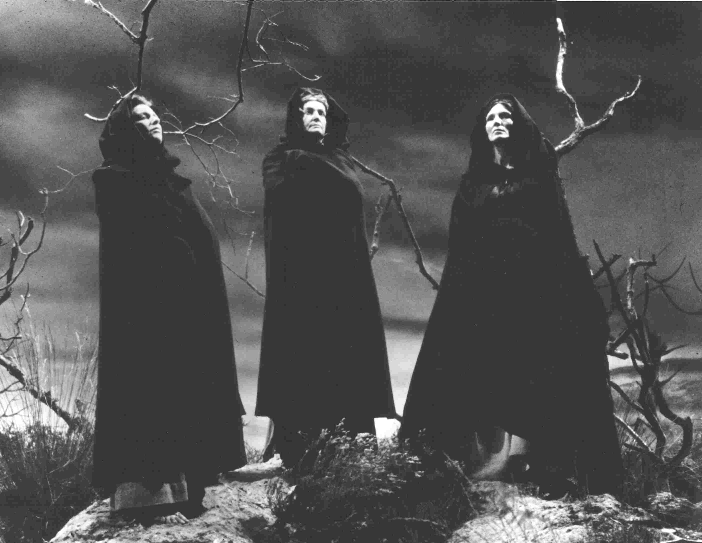
It’s wonderful that Shakespeare created such a strong and dominate female lead. I really did appreciate that she broke the model for a traditional female character. She was actually more of a male figure than Macbeth: she’s strong-willed, ambitious, and violent. However, I really viewed Lady Macbeth as more of a disease; after Macbeth hears from the weird sisters that he will be king, his wife immediately begins feeding him poisonous thoughts about power and it is she who provides Macbeth with the plot to kill King Duncan. Macbeth is barely able to summon enough “courage” (if you can call it courageous to kill your friend and king) to commit the murder, and it is Lady Macbeth who guiltlessly adds the finishing touches needed to successfully frame two of the king’s men.

This murder and great conflict occurs early on in the play in Act II, and in the remaining three acts we witness how the deepening guilt destroys Macbeth and his wife. For those who have read Macbeth, you know there are plenty of memorable themes going on. Obviously, don’t murder someone in order to take their place! The guilt will literally be the end of you. Hamlet taught that to us as well. I think my favorite theme from Macbeth, however, was that not everything is as it seems, or as Macbeth so eloquently puts it, “fair is foul, foul is fair.” What seems like a fortuitous future may actually bring us nothing but regret and guilt, our friends could end up being our enemies, and even those characters who would appear angelic and hospitable (such as Lady Macbeth) could actually be the most ruthless of them all.

I know that Macbeth  is one of Shakespeare’s most admired plays, and I understand why, but I have a question for those of you who love it: what do you find most enjoyable about it? Like I said, I’ve read it twice already and I don’t anticipate ever reading it again, but if anyone wants to take on the challenge of changing my mind about it, please try!

Northanger Abbey & Being Catherine Morland

Northanger Abbey

Yes, Catherine. The middle of the night is definitely the perfect time to inspect some creepy old cabinet.

Northanger Abbey by Jane Austen
Published Dec 1817 by John Murray
Classic/Romance/Suspense
Format: e-book; 170 pages
Also From This Author: Pride and Prejudice, Sense and Sensibility, Emma, Mansfield Park, Persuasion
Goodreads | Amazon
My Rating: 4/5

I was filled with a bitter-sweet feeling after finishing Jane Austen’s Northanger Abbey last month; bitter because it was the last Austen novel I had yet to read and sweet because I finally found the Austen heroine I most resemble. Yes, I am Catherine Morland: young, adventurous, naive at times, and above all, impressively talented at scaring myself.

Earlier this year I read Shannon Hale’s novels Austenland and Midnight in Austenland. The first novel borrows extensively from Pride and Prejudice, but Midnight in Austenland is a partial re-imagining of Northanger Abbey, so of course that means I wanted to stay up until 2 A.M. reading it. This is the perfect hour to read gothic novels: the moon is high and bright in the sky, everyone else in my apartment complex is fast asleep, and it’s either eerily quiet outside or there’s that one pair of stray cats defending their territories somewhere far off.

For those of you unfamiliar with Northanger or Midnight in Austenland, without spoiling too much, both Catherine Morland and Charlotte Kinder convince themselves that a gruesome murder has been committed and then become obsessed with finding (mainly fabricating) evidence and motives. So, while reading Midnight in Austenland, I heard (or imagined) a noise somewhere in my apartment and immediately my heart started pounding. Of course this noise can’t be nothing, and although, unlike our gothic heroines, I didn’t immediately imagine a murder scene, I did use the flashlight on my phone to quickly scan my bedroom to make sure nothing was lurking about. And that is the moment I knew I was Catherine Morland (despite the fact that at that point I hadn’t even read Northanger Abbey yet).

Northanger Abbey was published posthumously, roughly four months after Austen’s death, but interestingly enough it was actually the first novel Austen completed. It has many similarities to Austen’s other novels, for example it is a coming-of-age tale that includes deceptive “gold-digger” type characters, exaggerates inappropriate behaviors, and discusses the relationship between love, marriage, and fortune. However, this novel reads a lot differently than Sense and Sensibility or Pride and Prejudice, which were Austen’s first two published novels. I felt that the characters were somewhat flat and didn’t possess complex personalities, but this was probably Austen’s design in wanting her novel to be more plot-driven. She’s very much criticizing gothic literature in her unique comical way, and if she knew how badly I spooked myself while reading Northanger Abbey, she’d probably smirk and shake her head at me.

Besides Catherine Morland, we also have the witty and always-amiable Mr. Henry Tilney who unintentionally provokes Catherine’s overactive imagination, as well as the persistently arrogant John Thorpe, who literally had me muttering my annoyances out loud. Well done Austen for making a character seem both flat and unbearably annoying at the same time.

Like I usually do after reading most classic novels, I watched the film adaptation to Northanger Abbey as well. Fun fact: Mr. Henry Tilney is played by JJ Field, who also plays the male lead in the film adaptation of Austenland. I think I preferred his light-hearted and teasing nature as Mr. Tilney, but maybe that’s just the Catherine in me speaking ;) Either way, I enjoyed both films, although Austenland is typically cheesy.

jjfield

Top: Northanger Abbey (2007) // Bottom: Austenland (2013)

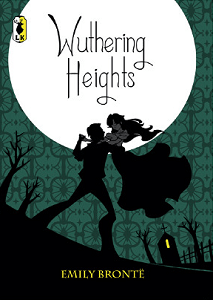
Wuthering Heights Chapter XXVII-The End

Wuthering Heights by Emily Brontë
Published December 1847 by Thomas Cautley Newby
Classic/Romance
Format: Paperback; 308 pages
Also From This Author: Poems By Currer, Ellis, and Acton Bell
Goodreads | Amazon
My Rating: 3/5

Before I finally post my last, lingering thoughts on Wuthering Heights, I feel like I need to say something about my month-long absence from blogging. January was a rather tough month for us in many ways, and I think the stress finally took its toll on me both physically and emotionally, so I basically “checked out” in February. My life revolved around working, watching the Olympics (Go Team U.S.A.! Yes, I am a huge Olympics fanatic), reading, and focusing on my responsibilities here in Grenoble. Also, I have been sick three times this month (guess that’s a side-effect of working with children). BUT, I am back and even though I am forcing myself to write and publish this last Wuthering Heights post, I am ready to dive back into the blogosphere with some exciting posts (such as my thoughts on Northanger Abbey, which I currently have my nose in, as well as a fun challenge I am giving myself for my birthday next week!).

wutheringheightsSo, let’s discuss how I felt about Wuthering Heights the second time around! But first, here are links to my previous posts:

Chapters I-IX
Chapters X-XVII
Chapters XVIII-XXVI

[Spoilers ahead, beware!]

This section starts off with one of the most suspenseful sections in the novel. Cathy, in her naivety and gentleness, is lured by Linton to Wuthering Heights, where Heathcliff essentially takes her prisoner. His intentions are obvious to the reader: he wants Cathy and Linton to become married. The worst part about this section is not the forced marriage, but the fact that Edgar Linton is on his deathbed and Cathy is afraid she will be unable to see him before he dies since Heathcliff refuses to let her leave.

“Mr. Heathcliff, you are a cruel man, but you’re not a fiend; and you won’t, from mere malice, destroy, irrevocably, all my happiness.”

Oh he would, but fortunately that doesn’t happen. Catherine is reunited with her father just before he dies, and finally Heathcliff becomes the master of both Wuthering Heights and Thrushcross Grange. Shortly afterwards, Linton dies as well, which is a sad passage considering that Heathcliff’s neglect is mostly responsible. At this point Nelly’s narration ends as we have arrived at Mr. Lockwood’s arrival, and we dare to ask ourselves, “What’s next?” in Heathcliff’s schemes.

Mr. Lockwood now decides to leave Thrushcross Grange, and I honestly can’t blame him, but before he leaves he visits Wuthering Heights one last time and we can now reconcile the Heathcliff, Hareton, and Cathy that we met at the novel’s beginning with those of Nelly’s narration. We see how cruel Cathy has become towards her cousin Hareton, and even though I never stopped desiring a happy ending for Cathy, I did sympathize with Hareton a great deal. I felt that he and Linton were the two extremes of the same spectrum: both were abused and neglected by Heathcliff, both were unloved by their fathers, and both sought the attentions of young Cathy Linton, yet we find that Hareton had a much stronger spirit than Linton. I understand and sympathize with the fact that Linton was already a frail child before falling into Heathcliff’s clutches, where he was further abused and terrified, but the way he responds is not the same way that Hareton responds to his own sufferings. Linton, out of fear, does whatever his father asks of him, regardless of the consequences it has on others. Yet Hareton, who does obey Heathcliff for the most part, still has his own desires that ultimately control his destiny.

Now, for the long-awaited happy ending! After several months, Mr. Lockwood returns to Wuthering Heights where we find that Heathcliff has died (and is unsurprisingly mourned by no one). Yet, before he died, his behavior changed a great deal, and he let go of his desires to continue his revenge on Cathy and Hareton. We have Catherine Earnshaw Linton to thank for this: that morbid grave exhumation scene in Chapter 29 now seems to have a greater purpose than to further elaborate Heathcliff’s twistedness. The final chapters of the novel show a much pleasanter scene at Wuthering Heights: Cathy and Hareton, once at odds, are able to forgive and forget and move on (finally someone is able to!), and Nelly confesses to Mr. Lockwood that the two will soon be married (this even elicited a silent “aww” from me).

My second time reading this novel produced some interesting reactions. My hatred for Heathcliff and Catherine Earnshaw grew deeper, yet I was finally able to see an actual happy ending for two characters I ended up “rooting for” this time around. Honestly, I don’t think I will attempt to read this novel again for another 10 years, but I was glad to see that some people who were reading along with me actually enjoyed it! That is refreshing.

For those who have read Wuthering Heights, what were your final thoughts on the novel? Do you think it deserves to be canonized? What was the biggest take-away for you? (For me it was to forgive and forget! Honestly, all of that bitterness and thirst for revenge seemed so exhausting)