Villette by Charlotte Bronté

31173

Arguably Brontë’s most refined and deeply felt work, Villette draws on her profound loneliness following the deaths of her three siblings. Lucy Snowe, the narrator of Villette, flees from an unhappy past in England to begin a new life as a teacher at a French boarding school in the great cosmopolitan capital of Villette. Soon Lucy’s struggle for independence is overshadowed by both her friendship with a worldly English doctor and her feelings for an autocratic schoolmaster. Brontë’s strikingly modern heroine must decide if there is any man in her society with whom she can live and still be free.

Villette by Charlotte Brontë
Published 1853 (under Currer Bell) by Smith, Elder & Co.
Format: e-book; 432 pages
Classics/Romance/Gothic Fiction
Also By This Author: Jane EyreShirley
AmazonGoodreads
My Rating: ♥♥♥♥

Thoughts:

Villette took me months to finish; 10 months to be exact. It may be surprising, therefore, that I would give this book a 4-star rating, but despite feeling like a sloth trying to force my way through the majority of this novel, the last 50-60 pages made the sluggish journey completely worth it.

Villette, much like its beloved sister-novel Jane Eyre, is a gothic Victorian love story involving a persevering, deep-feeling narrator and a misunderstood, secretly caring Byronic hero. Unlike Jane Eyre, Miss Lucy Snowe is an unreliable, often unlikable narrator. I actually had a hard time desiring good things for her until the final chapters. I won’t sugar coat it; being inside her mind was annoying at times. She was judgmental and behaved bitterly towards most of her companions. Charlotte Brontë purposefully gave her an icy surname.

Honestly, I was very disinterested in Villette until the climax of the story and from that point on I was hooked. The long-awaited sentimentality that Charlotte Brontë excelled at did not disappoint. On the contrary, it was so lovely I probably would have cried if I hadn’t been reading it at work (I happily sobbed through the ending of Jane Eyre from the privacy of my bedroom).

It also helps to know that Villette borrows from real events in the author’s life. It could even be called autobiographical in many ways. If you’ve already read Villette or you don’t mind major spoilers, here’s an excellent analysis of the novel and Charlotte’s connection to Lucy Snowe.

Read This Book If…

…you enjoy classic gothic literature (think Jane EyreNorthanger Abbey, or even Edgar Allan Poe).
…you love unrequited love stories.
…you can enjoy a book even if the main character is unpleasant or hard to sympathize with.
…you love captivating conclusions (Villette will intrigue you and stay on your mind long after you finish it).

Final Musings

There was a 1970s miniseries of Villette, but alas! It has been lost. Unfortunately this is the case for numerous British miniseries from the 1970s and earlier. Frankly I think it’s horrible and I’m really upset because I would love to watch all of the literary-inspired shows!

There are also two different radio dramatizations of Villette that BBC Radio has produced, but I haven’t found a way to listen to them, yet :(
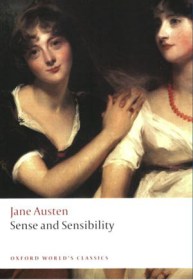
Sense and Sensibility by Jane Austen

senseandsensibility

Marianne Dashwood wears her heart on her sleeve, and when she falls in love with the dashing but unsuitable John Willoughby she ignores her sister Elinor’s warning that her impulsive behaviour leaves her open to gossip and innuendo. Meanwhile Elinor, always sensitive to social convention, is struggling to conceal her own romantic disappointment, even from those closest to her. Through their parallel experience of love—and its threatened loss—the sisters learn that sense must mix with sensibility if they are to find personal happiness in a society where status and money govern the rules of love.

Sense and Sensibility by Jane Austen
Published 1811 by Thomas Egerton
Format: hardcover; 357 pages
Classics/Romance
Also By This Author: EmmaMansfield ParkNorthanger Abbey
GoodreadsAmazon

My Rating: ♥♥♥♥♥♥

Thoughts

Sense and Sensibility is the first novel by Jane Austen that I ever read. I randomly started reading it one day in 10th grade when I had some down time in class, and ever since I’ve been a Janeite. Last summer I reread Sense and Sensibility for the second or third time for Austen in August, but I got so caught up in baby shower plans and arts and crafts that I didn’t get a chance to post my review. And then this week something made me think of Alan Rickman :( which made me think about how much I love Colonel Brandon and Rickman’s portrayal of him that I decided it was finally time to talk about the book on my blog.

Besides Colonel Brandon, my absolute favorite part of Sense and Sensibility is Elinor. I know she’s not as entertaining or interesting as Marianne, but like Anne Elliot and Jane Bennet, she has qualities of selflessness and kindness that I admire and strive to incorporate into my own character, especially when I’m around people who really try my patience!

“Elinor was to be the comforter of others in her own distresses, no less than in theirs.”

Another quality of Elinor’s that I admire, that Anne Elliot also possesses; is the ability to think frugally and responsibly. In my personal life, I have a 6 month old baby and my husband and I just bought a house, so we could use some frugal thinking right now!

I have a hard time really reviewing Sense and Sensibility because there are so many good characters, plot twists, and heartfelt conversations. I could write essays on this book, but I also don’t feel that I have anything new to say about it. Except that I love Colonel Brandon! Oh wait, that’s not new, is it?

Read This Book If…

…you enjoy dry, witty humor.
…you like reading coming of age stories involving heartache.
…you’re looking for a timeless, excellently written classic to enjoy this summer.
…you love seeing close-knit family relationships in fiction.

Final Musings

Here are several Sense and Sensibility adaptations I’ve watched (and in some cases watched and rewatched):

Sense and Sensibility (1995)

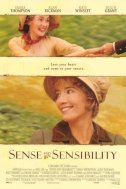
mv5bnzk1mju3mdqyml5bml5banbnxkftztcwnjc1otm2mq-_v1_sx640_sy720_Not only the best Sense and Sensibility adaptation in my opinion, but it’s also one of my all-time favorite films. The acting is what really makes this film so excellent. Everyone was perfectly casted and even the annoying characters (i.e. Lucy Steele) aren’t annoying enough to deter me from enjoying the movie over and over again (this is the exact problem I have with Mrs. Bennet and Mr. Collins in the Pride and Prejudice miniseries). The script also holds true to the novel and the soundtrack is lovely.
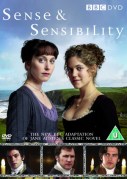
sense-and-sensibility-1995-sense-and-sensibility-2580847-300-425Sense and Sensibility (2008)

This is also a wonderful adaptation, although it can’t top the Emma Thompson film version. I loved Dan Stevens as Edward Ferrars and David Morrissey plays Colonel Brandon well, too. I wish I could buy the score because the music is hauntingly beautiful, but last time I checked I couldn’t find anywhere to purchase it :(

jo36wpieprojectdashwood_1423093042_140Web Series

There are two web series adaptations, “Elinor and Marianne Take Barton” and “Project Dashwood”, but I wouldn’t necessarily recommend them. They both could have used better scripts and I wasn’t a fan of the acting in Project Dashwood. I would love to see a well-adapted web series of Sense and Sensibility one day. Maybe I should try to get a production together myself… (just kidding?)

Demelza (The Poldark Saga #2) by Winston Graham

Demelza

In the enchanting second novel in Winston Graham’s beloved Poldark series, Demelza Carne, an impoverished miner’s daughter Ross Poldark rescued from a fairground brawl, now happily finds herself his wife. But the events of these turbulent years test their marriage and their love. As Ross launches into a bitter struggle for the right of the mining communities, Demelza’s efforts to adapt to the ways of the gentry (and her husband) place her in increasingly odd and embarrassing situations. When tragedy strikes and sows the seeds of an enduring rivalry between Ross and the powerful George Warleggan, will Demelza manage to bridge their differences before they destroy her and her husband’s chance at happiness?

Against the stunning backdrop of eighteenth century Cornwall, Demelza sweeps readers into one of the greatest love stories of all time.

Demelza (The Poldark Saga #2) by Winston Graham
Published 1946
Format: paperback; 432 pages
Classics/Historical Fiction/Romance
Also By This Author: Ross Poldark (The Poldark Saga #1)Jeremy Poldark (The Poldark Saga #3), Marnie, Cordelia
Goodreads | Amazon
My Rating: ♥♥♥♥

Thoughts:

It’s rare to enjoy a sequel more than the first book in a series, but as much as I loved Ross Poldark by Winston Graham, I was even more captivated by Demelza, the second part of the saga.

If you are familiar with the Poldark books or tv series, you probably love Demelza Carne/Poldark. How can anyone not love her? She has the classic rags-to-riches story and throughout the first two books in the series she quickly becomes the glue that binds the Poldark family together. Even the stauncher characters in the books lose their prejudice against Demelza’s lower class status when they meet her.

In Ross Poldark, Demelza first learns to become a servant, then Ross’s wife, then a lady of Nampara, and then a members of the extended Poldark family. In this second book we see even more of Demelza as she becomes a mother and an active member of the Cornwall community.

Demelza is a much darker novel than its predecessor. We see several feuds and tragedies unfold through Demelza’s eyes, the majority of which have detrimental consequences that remain unresolved at the end of the novel. Because Demelza has such a deep heart, reading this book through her point of view makes the story deeper and more emotional riveting.

“They are all sentimentalists at heart, the Poldarks.”

Read This Book If…

…you enjoy historical fiction.
…you’re interested in classics that revolve around technology (i.e. mining).
…you love paring books with film or tv adaptations (this is not the first–or last–time that I have raved about the current Poldark series).
…you’re looking for a book that will make you feel everything deeply.

“Everything at the moment, my dear, no doubt seem disgusting. I know the mood too well. But being in that mood, Ross, is like bing out in the frost. If we do not keep on the move we shall perish.”

Final Musings:

BBC recently wrapped up filming for the second season of Poldark, and since I don’t plan on reading the third book, Jeremy Poldark, until after the season ends, I have no ideaa what’s in store! Normally I would read the book first, but so far I’ve enjoyed seeing the perspectives of the show creators before I can compare their adaptation to the book.

Here’s a clip from season 2 of Poldark, which follows the plot events of Demelza. Currently the entire collection of aired episodes is available to watch on Amazon Prime. I kind of feel like rematching it after finishing this book :)

And Then There Were None by Agatha Christie

And Then There Were None

First, there were ten – a curious assortment of strangers summoned as weekend guests to a private island off the coast of Devon. Their host, an eccentric millionaire unknown to all of them, is nowhere to be found. All that the guests have in common is a wicked past they’re unwilling to reveal – and a secret that will seal their fate. For each has been marked for murder. One by one they fall prey. Before the weekend is out, there will be none. And only the dead are above suspicion.

And Then There Were None by Agatha Christie
Published November 6, 1939 by Collins Crime Club
Format: e-book; 264 pages
Classics / Mystery

Also By This Author: Murder on the Orient ExpressMurder at the Vicarage
Goodreads | Amazon
My Rating: ♥♥♥♥

Thoughts:

Last month (I think it was last month, I’m so far behind on my reviews!) I read Agatha Christie’s most famous book, And Then There Were None in an entire day. I seriously could not put it down. This was my second Agatha Christie novel and I’m so glad I finally read this one because I loved it!

The author’s introduction had me intrigued from the start. I tried to be extremely observant so I could figure out some clues along the way, but I did not want to discover “whodunnit” before the big reveal. I thought it would be more suspenseful that way, and it was! Although I did not guess who the killer was, I did have some inklings along the way. I won’t say any more because I don’t want to spoil anything.

Read This Book If…

…you enjoy reading books that keep you on the edge of your seat.
…you’re into mysteries, especially murder-myseries.
…you like stories that are told from multiple points of view.
…you love thrillers!

Final Musings

The biggest reason why I wanted to read this novel was because of the recent BBC adaptation starring Aidan Turner (of Poldark fame) among some other lovely actors such as Sam Neill and Miranda Richardson. The adaptation itself was very spooky and even more suspenseful than the book, which surprised me since at that point I already knew what happened. The story reached the same outcome, but the means the miniseries creators took to get there differed slightly from the book. But it worked very well, in my opinion.

I have yet to watch any other adaptations but I was very satisfied with this one. Here’s the trailer if you’re interested!

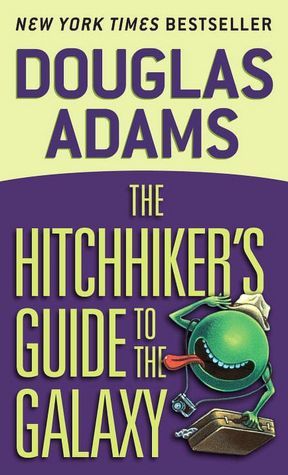
The Hitchhiker’s Guide to the Galaxy by Douglas Adams

Hitchhiker's Guide

“Don’t Panic.”

The Hitchhiker’s Guide to the Galaxy by Douglas Adams
Published October 12, 1979 by Pan Books
Science Fiction/Fantasy/Comedy
Format: audio book; 5 hours 51 minutes (224 pages)
Also By This Author: The Restaurant at the End of the Universe
Goodreads | Amazon
My Rating: 4/5

Synopsis:

Seconds before the Earth is demolished to make way for a galactic freeway, Arthur Dent is plucked off the planet by his friend Ford Prefect, a researcher for the revised edition of The Hitchhiker’s Guide to the Galaxy who, for the last fifteen years, has been posing as an out-of-work actor.

Together this dynamic pair begin a journey through space aided by quotes from The Hitchhiker’s Guide (“A towel is about the most massively useful thing an interstellar hitchhiker can have”) and a galaxy-full of fellow travelers: Zaphod Beeblebrox–the two-headed, three-armed ex-hippie and totally out-to-lunch president of the galaxy; Trillian, Zaphod’s girlfriend (formally Tricia McMillan), whom Arthur tried to pick up at a cocktail party once upon a time zone; Marvin, a paranoid, brilliant, and chronically depressed robot; Veet Voojagig, a former graduate student who is obsessed with the disappearance of all the ballpoint pens he bought over the years.

Thoughts:

I listened to an audiobook version of this beloved novel back in May when I took a road trip to Florida, and it definitely helped to pass the time! The version I listened to was narrated by Douglas Adams himself, which was quite a treat. Although I had never read this book before, I had seen the movie version starring Martin Freeman, but to be honest, I forgot most of what happens after the Earth is destroyed!

I haven’t read very many comedies, or science fiction novels for that matter, but I did enjoy the humor in this one. The tone took a little time to get used to, and some of the characters and situations were hard to keep my interest at times (although, to be fair, that could also have been because I was listening instead of reading for myself), but overall this novel was definitely enjoyable and very funny.

My favorite part of the story was probably the whole idea that there were multiple alien civilizations existing in the galaxy that Planet Earth was oblivious to. And the “legendary planet” Magrathea was pretty neat, too (you’ll have to read the book to find out why it’s so awesome).

Read This Book If:

…you like to laugh out loud.
…you have a vast imagination.
…you’re into science fiction.
…you get witty, sarcastic British humor.

Final Musings:

If you need a short book to entertain you, The Hitchhiker’s Guide to the Galaxy is sure to do the trick. Just make sure you pay attention or you’ll end up seriously lost (I had to rewind the audiobook a couple of times while I was driving to figure out what was going on). And if you’re into comparing book-to-film adaptations, you can always treat yourself to this gem afterwards:

The Hitchhiker's Guide to the Galaxy

Marvin the robot: “Oh God I’m so depressed.”

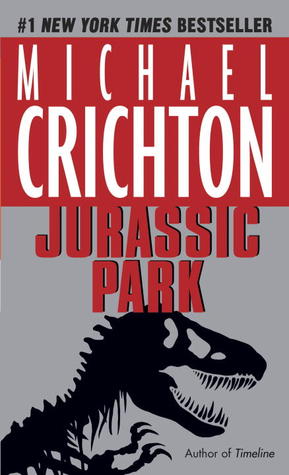
Jurassic Park by Michael Crichton

Jurassic Park

Because the history of evolution is that life escapes all barriers. Life breaks free. Life expands to new territories. Painfully, perhaps even dangerously. But life finds a way.

Jurassic Park by Michael Crichton
Published January 1, 1990 by Ballantine Books
Science Fiction/Thriller
Format: paperback; 399 pages
Also From This Author: The Lost WorldTimelinePrey
Goodreads Amazon
My Rating: ♥♥

Synopsis:

A billionaire has created a technique to clone dinosaurs. From the DNA that his crack team of scientists extract, he is able to grow the dinosaurs in his laboratories and lock them away on an island behind electric fences, creating a sort of theme park. He asks a group of scientists from several different fields to come and view the park, but something goes terribly wrong when a worker on the island turns traitor and shuts down the power.

Thoughts:

As a dino-nerd who has been both terrified and enthralled by “terrible lizards” for most of her life, it still shocks me that I waited this long to read Michael Crichton’s thrilling classic Jurassic Park. I’ve even had a gently used paperback copy on my bookshelf for several years now, but it wasn’t until I saw Jurassic World recently that I finally desired to dive into the book that started it all. And dive I did, for I could not put it down once I got past the few introductory chapters. This book kept me riveted until the very last page (literally) and all the things I love about Jurassic Park the film were only multiplied by the novel.

The voices of the characters are so clear that it was effortless to hear them debating back and forth across the page. Ian Malcolm’s philosophical rants are twice as long yet much deeper than they are in the film, and John Hammond, while stubborn and slow to see the true failure of his endeavors on screen, is impossibly hard-headed (and might I add hard-hearted) in the novel. And Alan Grant and Ellie Sattler are still my heroes :)

I loved the clear black and white themes running through Crichton’s book as well. They give you so much to think about that my mind was still pondering over everything days after I finished the book. I even went and bought the sequel the next day! Although, I’m saving it for my vacation next week ;)

Read This Book If:

…you love dinosaurs! (or are terrified by them)
…you are looking for a book to keep you on the edge of your seat up until the very last page.
…you enjoy light science fiction and thrillers.
…you’re longing for a book that makes you think and feel.

Final Musings:

I use this phrase very rarely, but Jurassic Park is a must-read for anyone who has watched the movie(s) and longed for more. The film has of course strayed from the novel in some ways, but the general themes and diatribes remain genuine. You will not be disappointed by Michael Crichton’s most famous thriller!

You know, at times like this one feels, well, perhaps extinct animals should be left extinct.

North and South by Elizabeth Gaskell

NorthandSouth

“Looking back upon the year’s accumulated heap of troubles, Margaret wondered how they had been borne. If she could have anticipated them, how she would have shrunk away and hid herself from the coming time! And yet day by day had, of itself, and by itself, been very endurable–small, keen, bright little spots of positive enjoyment having come sparkling into the very middle of sorrows.”

North and South by Elizabeth Gaskell
Published in 1858 by Chapman & Hall
Classics/Drama/Romance
Format: paperback; 424 pages
Also From This Author: Cranford, Wives and Daughters
  Goodreads Amazon
My Rating: 5/5

Synopsis:

When her father leaves the Church in a crisis of conscience, Margaret Hale is uprooted from her comfortable home in Hampshire to move with her family to the north of England. Initially repulsed by the ugliness of her new surroundings in the industrial town of Milton, Margaret becomes aware of the poverty and suffering of the local mill workers and develops a passionate sense of social justice. This is intensified by her tempestuous relationship with the mill-owner and self-made man, John Thornton, as their fierce opposition over his treatment of his employees masks a deeper attraction. In North and South, Elizabeth Gaskell skillfully fuses individual feeling with social concern, and in Margaret Hale creates one of the most original heroines of Victorian literature.

Thoughts:

So, I adored this novel. It was such a wonderful surprise, because I had read the first third of it for a Victorian Lit & Technology seminar I took in college, but for various reasons I never finished it (the curse of assigned reading). This year, I decided to read it as part of my Classics Club and Back to the Classics lists, and now I keep thinking, “Why did I never read this book sooner?!”

North and South is a coming of age tale of sorts that follows Margaret Hale and her family as they move from their beloved country home of Helstone in the south of England to the industrial manufacturing city of Milton in the north. I identified with this novel in some particular ways, namely the fact that I have uprooted my life before and moved from what is known and comfortable to what is foreign and seemingly harsh. I’m sure most expats feel the same way: when you move to a new country and are unfamiliar with the language and culture, it can be very stressful and depressing for a while. But, if you try to assimilate and learn the ways of your new home, chances are you’ll absorb parts of the new culture and learn to embrace its differences from your mother culture. This is something I loved most about Margaret. She could have boxed herself up and refused to reach out to her new neighbors, but instead she intermingles with Milton inhabitants of all class ranks, and she grows to love them. And her eagerness to do so has a positive effect on her acquaintances as well.

Which brings me to Mr. John Thornton. Even though Margaret despises him from the start, I always had a soft regard for him (probably because of Gaskell’s descriptions of him, and because I already knew how this story would end from watching the miniseries). Thornton is viewed as a cruel and unkind master who has no compassion for his mill workers, which isn’t true, but this is attributed to Margaret’s misunderstanding of Thornton and Milton ways. By the end of the novel, Thornton learns as much from Margaret and his workers as Margaret learns from all of them in return. I loved that they all had faults and they all struggled to overcome them.

“I wanted to see the place where Margaret grew to what she is, even at the worst time of all, when I had no hope of ever calling her mine…”

Oh yeah, and I loved the romance :) It was one of the “bright spots” that relieved the moments of grief and suffering that take up most of this novel.

Read This Book If…:

• You love reading Victorian Lit that focuses on social injustices and “new” technology.
• You enjoyed Jane Eyre (there lies the same themes of human conscience, right vs. wrong, and compassion).
• You’re intrigued by Byronic heroes (Mr. Thornton has, in my opinion, qualities of both Mr. Darcy and Mr. Rochester).
• You like endings that make you laugh, cry, and feel inspired <3

Final Musings:

North and South is not your typical period romance. It deals with some serious grief and suffering; but as Margaret Hale discovers, there is always some “bright spot” to make life enjoyable. Plus, there’s a Byronic romance that will make you swoon (and it even made me cry, happily and sadly). And if romance isn’t your thing, this novel still talks about social injustices that remain relevant today. Unlike some other similar novels, North and South will make you think and feel but it won’t leave you depressed (I’m looking at you, Wuthering Heights).

Stop by later this week to see my post on the BBC miniseries of North and South!

War of the Worlds by H.G. Wells

waroftheworlds

“For a time I believed that mankind had been swept out of existence, and that I stood there alone, the last man left alive.”

The War of the Worlds by H.G. Wells
Published in 1898 by William Heinemann
Classics/Science Fiction
Format: paperback; 248 pages
Also From This Author: The Time Machine, The Invisible Man
  Goodreads Amazon
My Rating: 4/5

Synopsis

Man had not yet learned to fly when H.G. Wells conceived this story of a Martian attack on England. Giant cylinders crash to Earth, disgorging huge, unearthly creatures armed with heat-rays and fighting machines. Amid the boundless destruction they cause, it looks as if the end of the world has come.

Thoughts

As an amateur fan of early science fiction, I am just amazed at H.G. Wells’s creativity and imagination. He wrote this book before the Wright brothers had even developed a way for man to fly, and yet he was able to effortlessly describe flying capsules crashing to Earth in the dawn of an alien invasion. I have always been so amazed at people who are able to imagine the idea of something before it is even tangible. I don’t have that type of intuition or innovation, so I really admire people who do.

This was not my first experience with The War of the Worlds. I remember seeing the 2005 film version with Tom Cruise and Dakota Fanning and being absolutely absorbed in the story. I was terrified and wondrous at the same time. So when I finally started reading this book I was happy to find that The War of the Worlds was as suspenseful and thought-provoking on page as it was on-screen.

One of my favorite aspects of science fiction is the social commentary. I love that science fiction is more about analyzing the human condition than it is about the technology and the futuristic settings. H.G. Wells was a huge part of the social science fiction movement, and in The War of the Worlds this is seen in the relationship between the narrator and the Curate as the world they know is falling apart. This relationship was the most interesting part of the novel for me.

Read This Book If…:

…you enjoy Sci-Fi, especially early Sci-Fi
…you’re looking for a book that can speak to all generations
…you’re a lover of suspense!
…curiosity gets the better of you sometimes

Final Musings

I don’t know why I hesitated for so long before finishing an H.G. Wells novel! I love so many movie adaptations of his works, it’s no surprise really that I’d love his books too. Next H.G. Wells book I’ll read will be The Time Machine (which happens to be one of my favorite movies!).

Are you a fan of H.G. Wells? What are some of your favorite early science fiction works?

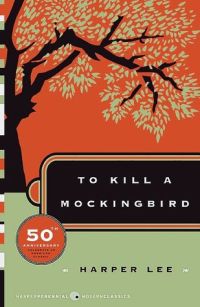
To Kill a Mockingbird & Childhood Innocence

tokillamockingbird

The sixth grade seemed to please him from the beginning: he went through a brief Egyptian Period that baffled me – he tried to walk flat a great deal, sticking one arm in front of him and one in back of him, putting one foot behind the other. He declared Egyptians walked that way; I said if they did I didn’t see how they got anything done, but Jem said they accomplished more than the Americans ever did, they invented toilet paper and perpetual embalming, and asked where would we be today if they hadn’t? Atticus told me to delete the adjectives and I’d have the facts.

To Kill A Mockingbird by Harper Lee
Published July 1960 by J.B. Lippincott & Co.
Classic/Young Adult
Format: Paperback-324 pages
Goodreads | Amazon
My Rating: 5/5

One of my favorite parts about this novel was that it’s told from the point of view of a 6-year-old girl, so every now and then we get to enjoy hilarious commentaries like this one about the Egyptians. Scout’s childhood perspective serves more than to amuse us, however. Her innocence and unprejudiced outlook on life brings us emotional conviction, but one that inspires hope in us instead of guilt or regret. To Kill a Mockingbird takes place shortly before the peak of the Civil Rights Movement, so there is a great deal of racial tension going on that is presented through the eyes of a child, which is genius, in my opinion. I loved that Harper Lee did that; having Scout narrate her observations was a powerful way of highlighting not only the injustice in racism, but the injustice in all prejudices. I think one of my favorite scenes in this novel happened during the big court case, when Scout and Dill stepped outside for a moment  and ended up having a conversation with Mr. Raymond, “the town drunk”. Mr. Raymond is known for stumbling around town nursing a brown paper bag-covered bottle. When Dill comes out of the courthouse with an upset stomach, Mr. Raymond offers him a sip of his drink to help him feel better, and this is when we find out that all Mr. Raymond has been drinking is Coca-Cola. The reason? Because the townspeople don’t agree with Mr. Raymond’s lifestyle (he has “mixed” children), so he feels the need to give them a reason for his actions–or something they can blame them on.

I had never encountered a being who deliberately perpetrated fraud against himself. But why had he entrusted us with his deepest secret? I asked him why. “Because you’re children and you can understand it…”

I love this statement that children can understand what adults are often blinded from. They haven’t been as tainted by prejudices like adults have been. And in Scout’s case, this can be attributed to her moral upbringing by her father, Atticus. Let me just say that Atticus is my favorite fictional parent ever–I inspire to be like him when I’m a parent one day. He shows how important moral education is for children, and I believe the book argues that moral education is the responsibility of the parent, and not the responsibility of teachers or even extended family members. Whenever Scout and Jem have questions, Atticus answers them, and he answers them in a way that his children can understand. Whenever they have faulty opinions, Atticus realigns them, and he does it in a way that doesn’t belittle his children. He takes his role as a father very seriously and he always leads by example. This theme of childhood innocence in To Kill a Mockingbird was incredibly powerful to me as a reader. I mentioned at the beginning that Scout’s narration produced this inspiring emotional conviction in me, and I don’t think I would have been as impacted by this novel if it had been written from any other POV, even if Jem had been the narrator. I loved Jem, he was a great older brother, but he was already a little too grown up to be the most effective narrator. But, he and Scout both gave me plenty of chuckles from quotes like the one I’m about to end this post with:

As I made my way home, I thought Jem and I would get grown but there wasn’t much else left for us to learn, except possibly algebra.

Clearly there are countless of things to be said about To Kill a Mockingbird, but what were the ones that stood out to you the most?

Little Women: Discovering a Childhood Classic in Adulthood

littlewomenLittle Women by Louisa May Alcott
Published 1868 by Roberts Brothers
Classic/Young Adult
Format: e-book; 560 pages
Also From This Author: Little MenJo’s Boys
Goodreads | Amazon
My Rating: 5/5

I have seriously been slacking on my book reviews. I finished Little Women weeks ago and I’m finally forcing myself to type out my thoughts. But rest assured, I loved every minute of this book.

I am still surprised at myself for not having read this book when I was a child, especially because it is right up my alley. Little Women is the type of book that makes me want to have daughters one day, so we can read it together and gush over our favorite moments.  Although I felt oddly guilty at the fact that I didn’t read this book sooner, I did already know the story because I grew up watching the 1994 film version with Winona Rider and Christian Bale. Ilittlewomenmovie still really love this movie, but I am so glad I finally read the novel because it helped redeem some characters and plot lines for me, specifically Amy March, who I had always regarded as the bratty younger sister who just never matures. But she does mature! The movie just doesn’t elaborate on it. So, moral is: always read the book! Even if you read it afterwards :)

My absolute favorite part of this novel was the relationship between the March sisters. They seemed so real despite the fact that they were ideal relationships. They laughed together, cried together; they fought and they made up; they made sacrifices for each other and they took care of one another. You could see so much love that it really encourages you to love your own family a bit more. So many times during this novel I wished I could have hugged my siblings!

Another aspect of this book that really made an impression on me was the role of Marmee. She’s more than just a mother; she’s also a friend to the March sisters and she’s their guide in every area of life. I loved how much wisdom she showed to the girls, wisdom that I definitely benefited from myself. One of my favorite scenes of Little Women is when Marmee gave Meg some advice about nurturing and caring for her new marriage:

“Guard against the little piques, misunderstandings, and hasty words that often pave the way for bitter sorrow and regret.”

I probably related the most to Meg, the eldest sister and the one who first realized that what she needed in life was not what she had always wanted:

She had not yet learned to know how rich she was in the blessings which alone can make life happy.

I loved the gentleness of Beth, always caring and unselfish. She seems like the least developed of the March sisters, but really she holds them all together:

There are many Beths in the world, shy and quiet, sitting in corners till needed, and living for others so cheerfully that no one sees the sacrifices till the little cricket on the hearth stops chirping, and the sweet, sunshiny presence vanishes, leaving silence and shadow behind.

Amy, Amy, Amy… Like I said before, I used to get extremely aggravated by her brattiness because that’s mostly what the 1994 film version portrayed. But she’s just a typical baby sister who still has to grow out of her selfishness and immaturity, just like we all (hopefully) do. We see less of these traits in Meg, Jo, and Beth because they are already relatively grown up when the novel starts. However, I do love the later chapters that focus on Amy’s growing up because we get to see things from her POV and it’s in those chapters that I realized how much Amy does care about those around her. And for those of you who still ship Jo and Laurie, let me just say that Louisa May Alcott got it right. Amy is by far the much better match for Laurie, and it’s because of her that he finally stopped being lazy and mopey. And this quote from Amy regarding marrying Laurie is what really redeemed her character for me:

“How delightful it is to be able to help others, isn’t it? That was always one of my dreams, to have the power of giving freely, and thanks to you, the dream has come true.”

And of course there’s our heroine, Jo, who helps us all realize that we can attain our dreams with lots of hope and hard work, and who, like me, forgets and remembers this beautiful thought:

“I do think that families are the most beautiful things in all the world!”

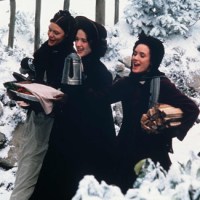
littlewomenmovie2Little Women (1994)

I have always loved this movie! I used to watch it with googly eyes when I was younger (I don’t have googly eyes now, of course…). It’s one of those movies I could watch every day and that has those heart-touching scenes that never fail to make me cry (like when Beth gets her piano! Bravo Claire Danes on bringing out the tears from me). And although I am probably one of the few consistent shippers of Jo and Professor Bhaer, I have always loved them together. That scene at the end is one of my favorites :)

Pros: the acting! All of the locations and costumes, staying relatively true to the original story.

Cons: cutting out some of my favorite character developments (but it’s understandable), like Amy’s maturity and the early relationship between Meg and Mr. Brooke (which I really gushed over in the book).

For those of you who have read (or watched) Little Women, what were some of your favorite moments? How do you feel about Amy and  the “love square” between her, Jo, Laurie, and Professor Bhaer?